

DefenseHub · Saturday — Tactics · July 25, 2026
By R. Planche · Chief Editor & OSINT Curator
The Confederacy won most of the Civil War's early battles even though the Union held the edge in manpower and material. That imbalance is the real puzzle of 1861 to 1862. EBSCO's Research Starters overview of Civil War weapons, tactics, and strategies traces it to two things: Southern generalship and faster Confederate adoption of new infantry weapons. The harder question is how long that edge could last once the North's resources caught up, and whether generalship and weapons are the whole story.
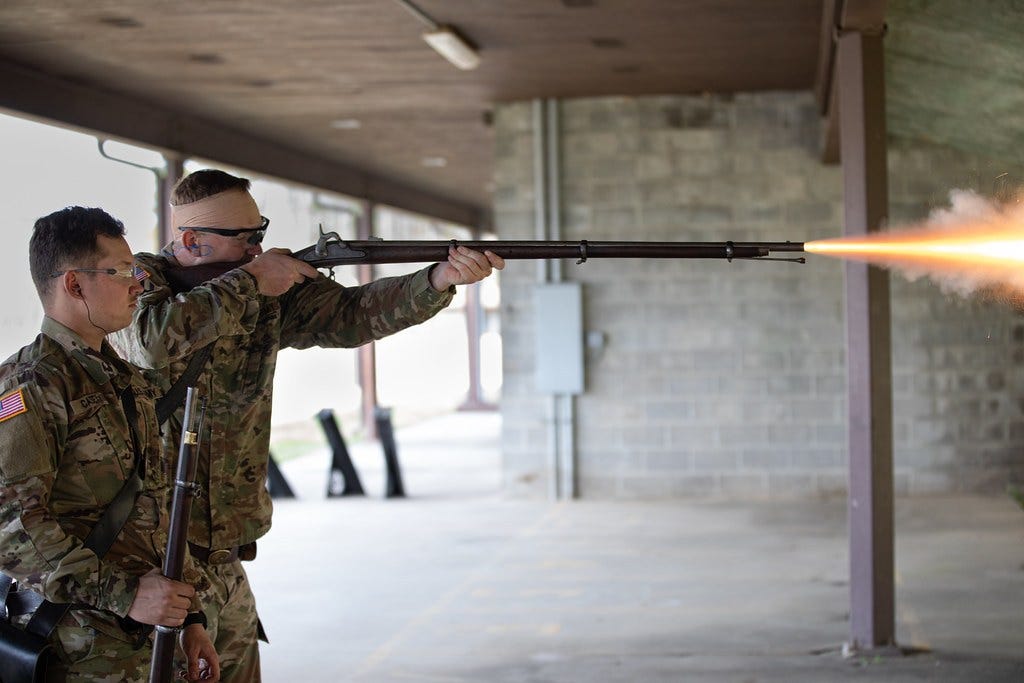
📸 1863 Weapons Class (Credit: Georgia National Guard / CC BY 2.0 via Openverse)
What We Know
EBSCO's summary is direct on this point. Despite the North's manpower and material advantages, early Southern battlefield gains stemmed from strong generalship and rapid weapons adoption. That reading holds for the war's opening years, but it describes battlefield outcomes rather than the underlying supply picture. Some of that picture comes from HistoryOnTheNet, which cites historian Paddy Griffith's estimate, from his book Battle Tactics of the Civil War, that the Confederate government procured 183,000 smoothbore muskets against 439,000 rifles.
Griffith's methodology and exact date range are unspecified. With that caveat, the mix still suggests the South leaning into modern rifle-armed infantry even while running a smaller war economy than the Union's. HistoryOnTheNet's account also points to Lee's hands-off command habit, which shaped how those weapons were used.
Lee described his own approach to a Prussian military observer at Gettysburg: "I think and work with all my powers to bring my troops to the right place at the right time; then I have done my duty. As soon as I order them into battle, I leave my army in the hands of God." He called interference after that point more harmful than helpful. That hands-off style still allowed for individual brilliance. The U.S. Army Corps of Engineers documents the July 2, 1863, defense of Little Round Top.
Its account credits Brig. Gen. Gouverneur K. Warren with spotting the undefended hill and moving troops in time to hold it, a decision that preserved the Union's flank.
Operational Context
EBSCO's overview places the turn in the war right after the Battle of Antietam in September 1862. Union leaders shifted to a defensive posture in the East after that battle, accepting a stalemate in Virginia. By late 1862, Union forces turned more aggressive in the West. By 1863, that Western push had given Union forces control of the Mississippi River, dividing the Confederacy. Lee's second invasion, however, was a separate Confederate offensive, not part of the Union's shift.
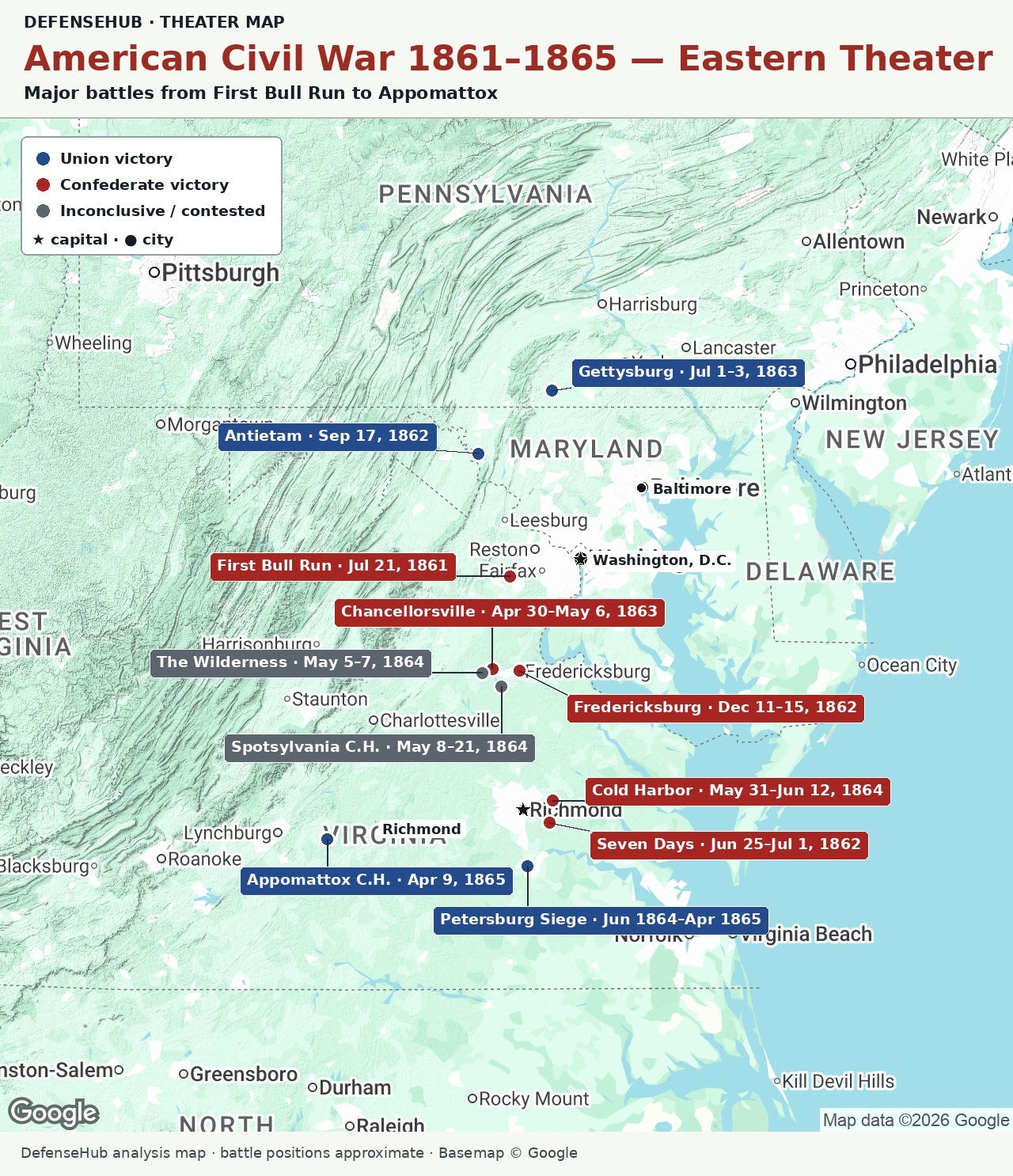
EBSCO's companion piece on Gettysburg, Vicksburg, and Chattanooga notes his army moved in the general direction of Harrisburg. Two outcomes followed within a day of each other, though they came from separate campaigns. The Battle of Gettysburg, fought July 1 to 3, 1863, ended Lee's invasion and left his forces unable to mount further offensives. The Siege of Vicksburg concluded the next day, July 4, 1863, with General Ulysses S. Grant cutting Confederate supply lines and capturing the Mississippi.
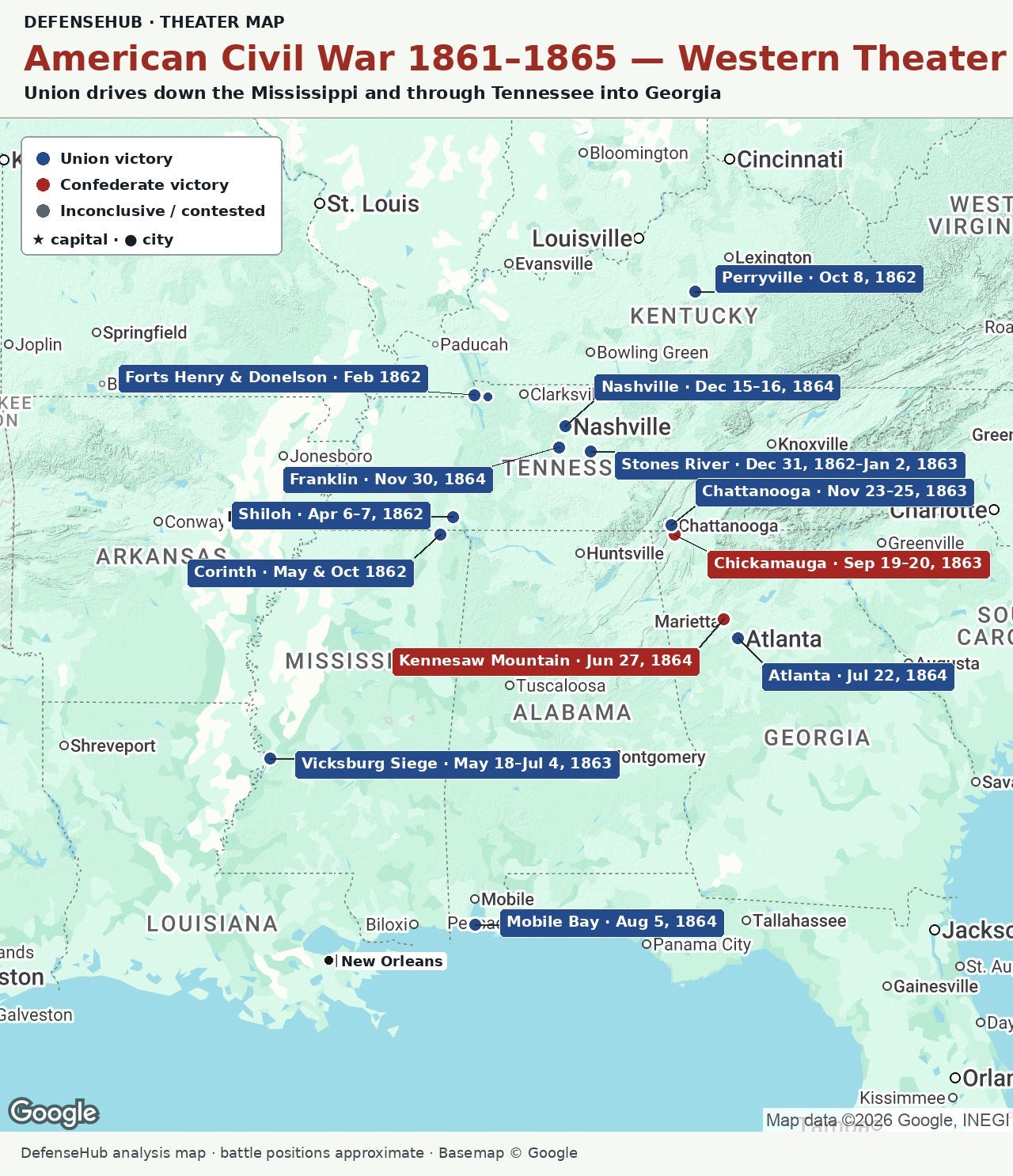
The timing link between the two events is confirmed across both EBSCO pieces, but the pieces treat them as separate battles under separate commanders rather than a single coordinated strategy. Gettysburg ended an invasion in the East. Vicksburg ended Confederate control of a river in the West. EBSCO does not describe the two as jointly planned; it presents their near-simultaneous timing as the moment Northern gains in both theaters happened to converge and check Confederate momentum after two years of Southern battlefield success.
My Read
Southern battlefield success early in the war was real, and the evidence gathered here supports EBSCO's two reasons for it: strong generals and quicker use of new rifles. But the evidence does not quantify how much Northern resource advantages mattered relative to generalship and weapons adoption. That reading is fair as far as it goes for 1861 and 1862.
The sources reviewed also do not address whether Union command decisions or strategic caution in the war's opening years contributed independently to Southern success. EBSCO's account starts its narrative of Union strategic shifts at Antietam in September 1862; what happened on the Union side before that point is outside the sources reviewed here.
Griffith's ordnance estimate, as reported by HistoryOnTheNet, shows the South arming itself with a heavy tilt toward rifles, from a narrower industrial base than the Union's. Lee's own description of his command style shows a general who trusted subordinates heavily once battle began. The Little Round Top episode serves as a good example. Warren's individual judgment mattered enormously in that moment, per the Army Corps of Engineers, which fits the "excellent generals" half of EBSCO's explanation.
But that kind of individual brilliance is harder to scale or replicate than rifle production or troop numbers. What would change this assessment is a Griffith estimate revision showing a narrower rifle-to-musket gap than the reported figures.
What to Watch
Future scholarship may revise how much credit goes to Confederate generalship versus early Union strategic caution.
Track whether newer scholarship revises Paddy Griffith's Confederate ordnance procurement estimates, since a different rifle-to-musket ratio would change how the material gap is read.
Note whether the Army Corps of Engineers or similar official accounts add detail on how individual battlefield decisions like Warren's fit into the broader Confederate-versus-Union resource picture.
How retrospectives handle the Gettysburg-Vicksburg timing overlap is also worth watching, since EBSCO treats the two as separately commanded battles whose outcomes landed close together rather than a single coordinated strategy.
Recommended Sources
Weapons, Tactics, and Strategies of the U.S. Civil War (EBSCO Research Starters): the primary framing source for this piece's angle on Southern early victories despite Northern advantages.
Battles of Gettysburg, Vicksburg, and Chattanooga (EBSCO Research Starters): confirms the July 1863 timing link between Gettysburg's end and Vicksburg's fall.
Warren at Gettysburg (U.S. Army Corps of Engineers): official account of the Little Round Top defense.
Effective Robert E. Lee Tactics During Civil War (HistoryOnTheNet): source for Lee's command-style quote and the Griffith ordnance procurement estimates.
Sources & Methodology
This briefing is based on open-source reporting, official releases, procurement documents, defense-industry disclosures, and specialist analysis available at publication time. Claims involving battlefield effects, classified programs, or active operations are treated cautiously unless corroborated by multiple independent sources.
DefenseHub prioritizes primary sources where available, including official releases, budget and procurement records, legislative documents, technical disclosures, institutional research, and reputable reporting.
Corrections or source clarifications can be sent through the DefenseHub contact page.
— R. Planche · DefenseHub