Before Saruman: Christopher Lee and the Work of RAF Intelligence
Maps, briefings and liaison explain the RAF intelligence work Lee described, and the limits of what we can establish about his role.
DefenseHub · Friday · Intelligence · November 20, 2026
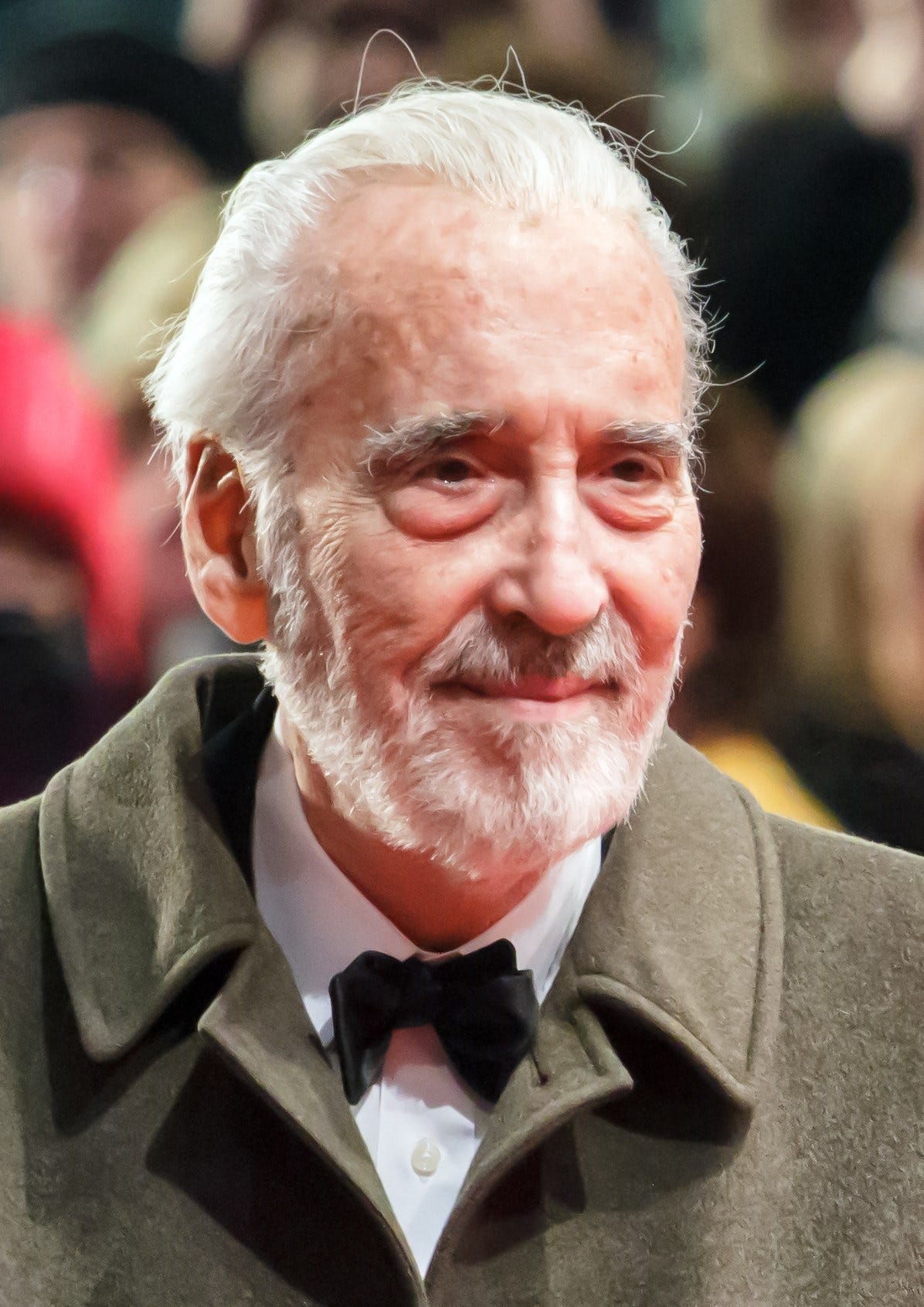

Christopher Lee remembered his wartime intelligence work through a trailer crowded with paperwork and maps. Before he played Saruman, the Royal Air Force had given him a job whose raw material could cover a desk.
That detail offers a useful way into his war. An aircraft crew needed information it could act on: where it was going, what it might encounter and what had changed. Lee's account places him in the work of handling information. Understanding that job tells us more about his intelligence service than a list of secret missions we cannot substantiate.
What We Know
In a 2022 essay for Bloody Disgusting, Brian Keiper recounts Lee's autobiography, Tall, Dark and Gruesome. Medical problems ended Lee's pilot training, after which he applied to RAF Intelligence. Keiper quotes his description of working in a trailer surrounded by "paperwork and maps of all scales." Keiper's memoir-based account places Lee's service in North Africa, followed by Sicily and Italy.
This is a recollection reproduced by another writer, rather than a contemporary duty log. It establishes how Lee described the work. It does not identify which reports he handled or which decisions followed. Dominic Wells' 2009 interview for The Times, republished by Wells in 2015, also describes Lee's intelligence service in North Africa.
Historian Gavin Mortimer offers a more specific assessment of his connection to special forces. Writing in The Spectator in 2015, Mortimer describes Lee as an RAF liaison officer attached at different times to the Special Air Service and the Special Operations Executive between 1943 and 1945. He distinguishes that role from membership of those organizations. His account gives us a reason to take liaison seriously without assigning Lee an undocumented commando operation.
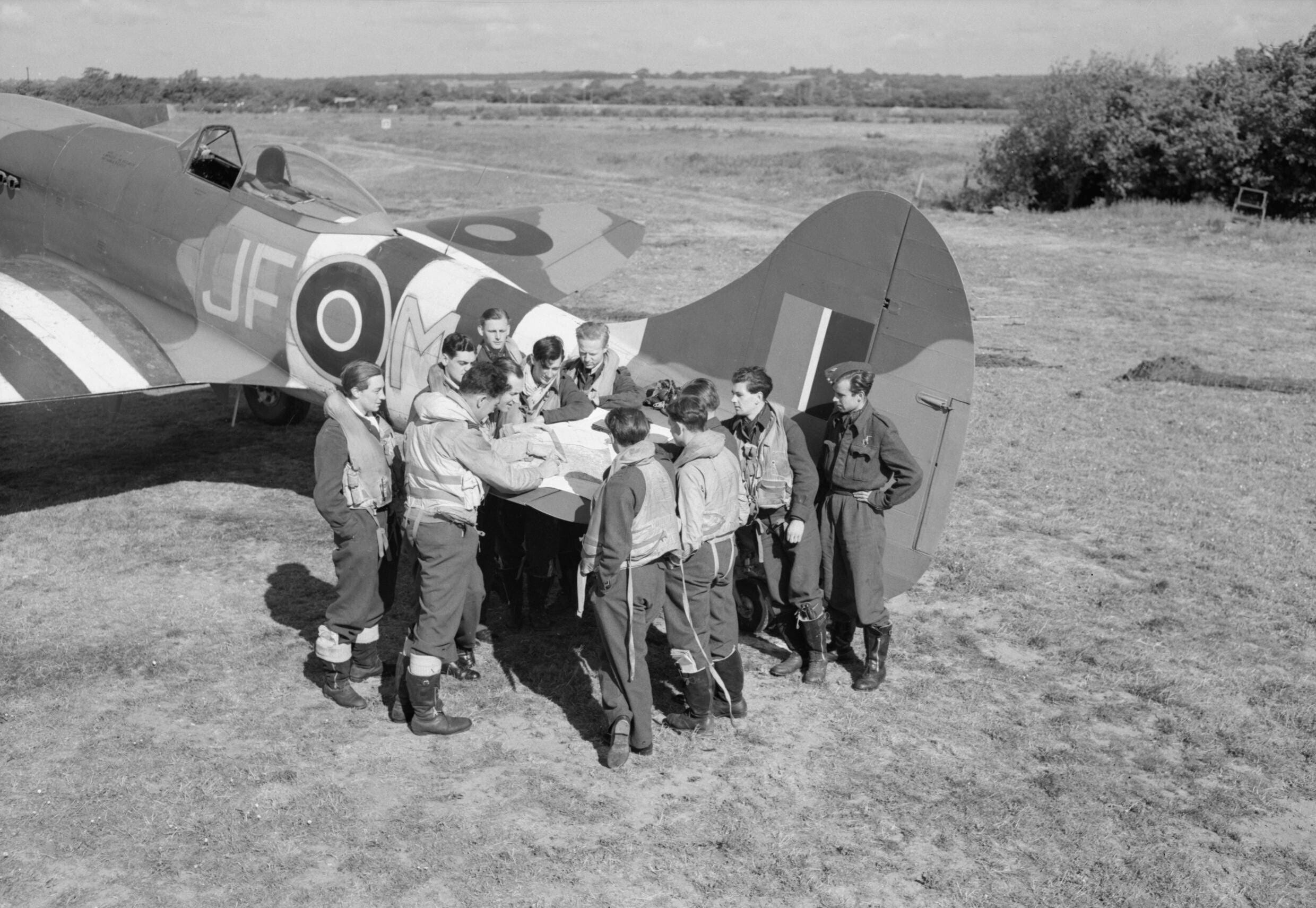
Official photographs show how other RAF personnel used briefings and returning pilots' reports. At Newchurch in Kent, Squadron Leader A. S. Dredge briefs pilots of No. 3 Squadron for a sweep over the Caen area. They gather around a map spread across a Hawker Tempest's tail.
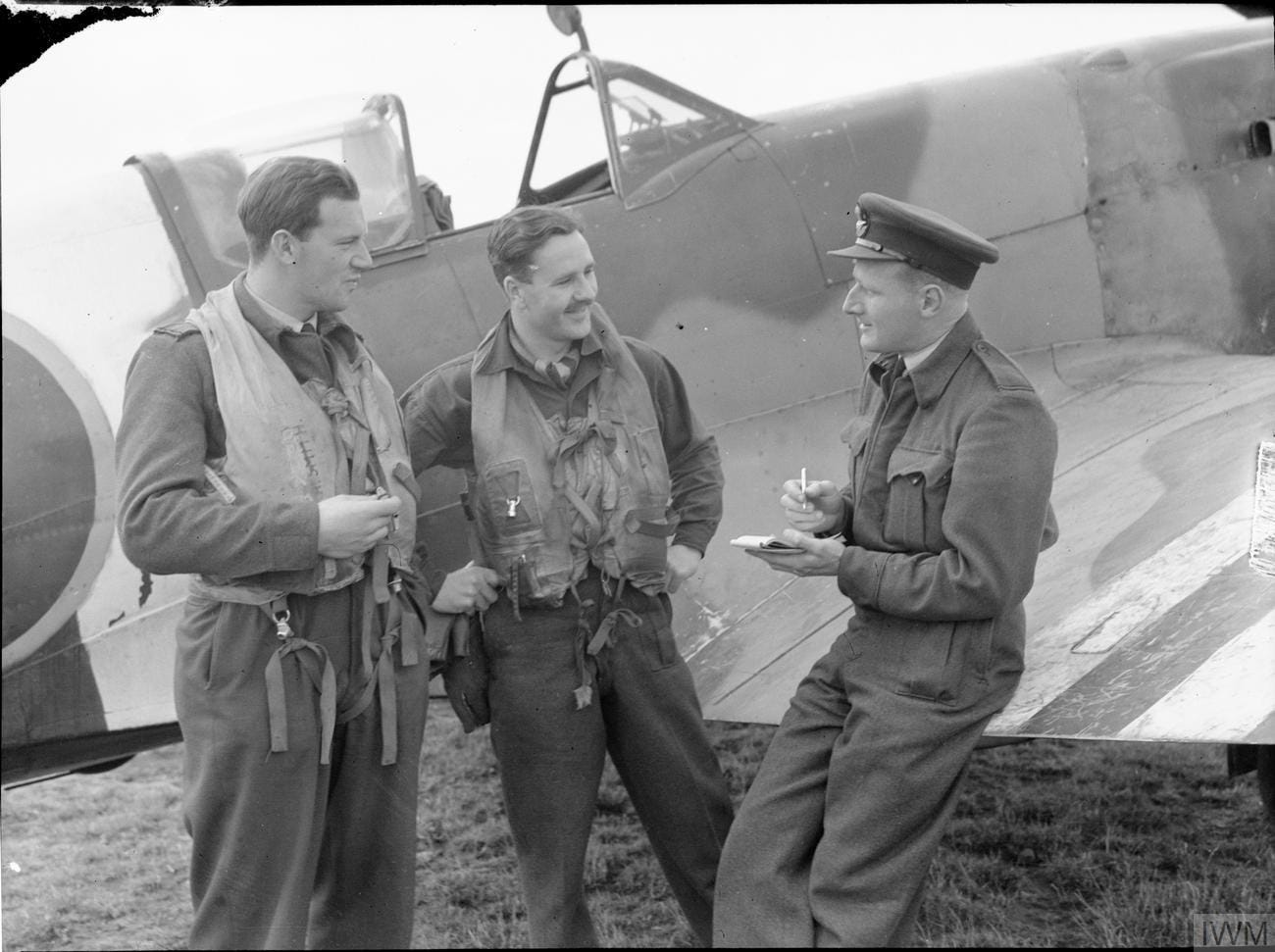
Another photograph, taken at West Malling in Kent, records pilots of No. 91 Squadron reporting to their intelligence officer after an anti-flying-bomb patrol. These are examples from Britain, illustrating the flow of information around RAF operations; they do not document an episode in Lee's own service.

Operational Context
The work began before anyone stood beside a briefing map. In the RAF Historical Society's Air Intelligence symposium, published in 1997, historian Sebastian Cox describes intelligence as collecting information, sifting and combining it, then reducing it to a usable form. He stresses the organization needed to make that information timely.
That distinction helps explain the paperwork. A location has to be intelligible to its recipient. Reports have to be compared. An assessment needs to distinguish what was observed from what someone inferred. These are practical demands of preparing information for a decision, even when the officer handling it collected none of the original observations.
The wartime photographs show information moving in both directions: crews receive a briefing in one image; pilots make reports in the other. They make the people and setting visible. The photographs cannot tell us whether a particular warning was correct or whether everyone understood it.
In the same symposium's discussion, Air Marshal Sir John Curtiss recalled how quickly intelligence reached Bomber Command squadrons by 1944. An intelligence officer could bring a last-minute addition into the nightly briefing. His example concerns a different command, but illustrates the operational requirement clearly: useful information had to reach the crew while there was still time to use it.
Lee's maps and Mortimer's description of liaison fit within this larger problem of making information usable across an organization. They do not give us a measure of how successfully Lee performed it.
My Read
I would put the maps at the center of Lee's intelligence story. They give his account a task we can understand: working through information that other people needed. Mortimer's description of liaison adds a second responsibility, connecting organizations whose proximity alone would not guarantee that useful information passed between them.
I find that a more substantial starting point than trying to attach a famous operation to his name. The officer with the maps belongs in the explanation of how air operations worked. The evidence we have supports discussing that contribution to the intelligence process, while leaving his individual results unmeasured.
The two wartime photographs make the paperwork easier to place. Pilots gather around a map before flying; elsewhere, an intelligence officer takes their reports. I see Lee's description against that working environment, without assuming that either photograph records his own duties.
I would be much more interested in a dated report bearing his name, or a record of an assignment, than another retelling of a secret mission. Either could move this account from a description of his role toward evidence of what he actually contributed. Until then, I would credit the work he described without writing an operational success story on his behalf.

What to Watch
Lee's individual RAF service record could clarify his postings and responsibilities; it would help separate assignments from later recollections.
The National Archives' AIR 27 squadron records, including Forms 540 and 541, may help check daily activity and, where recorded, named personnel once his assignments are established.
A contemporary report, briefing record or named colleague's account linking Lee to a specific intelligence task would allow a closer assessment of his contribution.
Recommended Sources
Brian Keiper, The Lives of Christopher Lee: An Icon at 100: Reproduces Lee's recollection of his intelligence work, including the trailer and maps.
Gavin Mortimer, Who dares lies: Distinguishes Lee's RAF liaison role from the special-forces service attributed to him in some obituaries.
RAF Historical Society, Air Intelligence, Bracknell Paper No. 7: Cox discusses the organization of intelligence on pages 6-13; Curtiss recalls wartime dissemination on page 111.
Imperial War Museums, RAF briefing at Newchurch: Identifies No. 3 Squadron's pilots and commander in the briefing photograph.
The National Archives, RAF squadron records: Explains how to research operations record books and distinguishes them from personnel records.
Sources & Methodology
This article uses Lee's recollections as reproduced by Brian Keiper and Dominic Wells, Gavin Mortimer's historical assessment, RAF institutional history and official photograph descriptions. Lee's individual service file and No. 260 Squadron's operations record books were not inspected. The photographs of Lee date from 2007 and 2013. The wartime RAF photographs are contextual examples from Britain and do not identify Lee.
DefenseHub prioritizes primary sources where available, including official releases, budget and procurement records, legislative documents, technical disclosures, institutional research, and reputable reporting.
Corrections or source clarifications can be sent through the DefenseHub contact page.
R. Planche · DefenseHub
Discussion about this post