Black Hawk Down: When a Capture Mission Became a Rescue Battle
Two helicopter losses turned a Mogadishu raid into an overnight fight that depended on U.S., Malaysian and Pakistani forces.
DefenseHub · Sunday · Military History · November 29, 2026
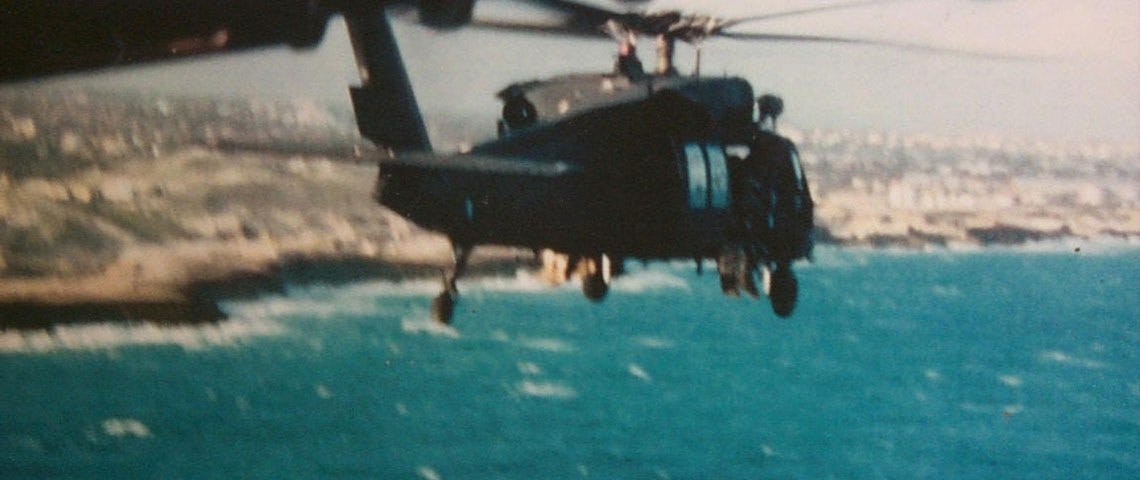
Task Force Ranger had captured twenty-four people in Mogadishu on October 3, 1993, when a Black Hawk helicopter was brought down by a rocket-propelled grenade. The assault force's problem changed immediately. Soldiers who had entered the city to seize suspects now had to reach a crash site, protect casualties and find a way out under fire.
The capture, the losses in the air and the eventual relief effort imposed successive demands on a force assembled for a much shorter operation. Following that sequence shows how a raid became a fight to recover people scattered across the city.
What We Know
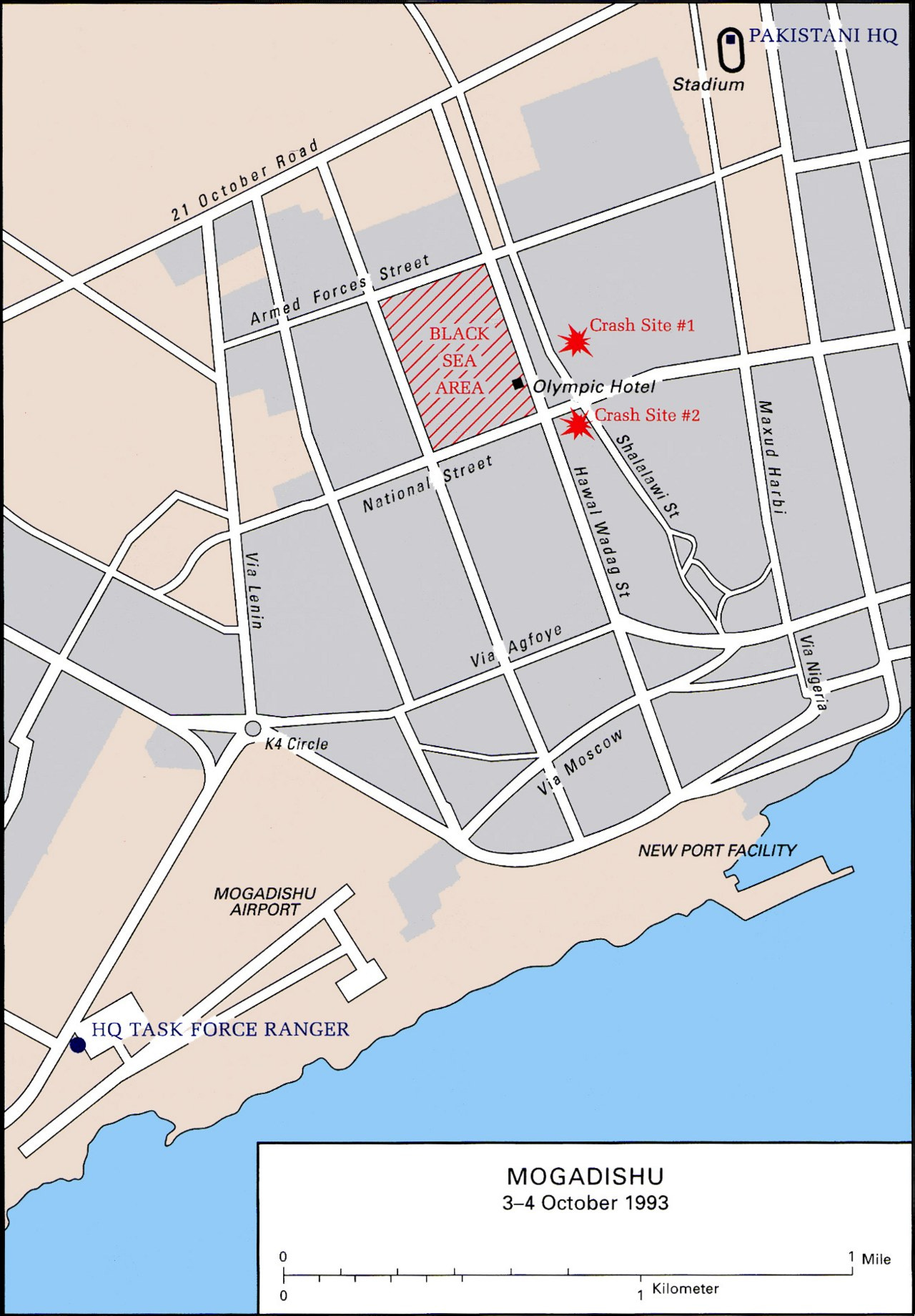
The mission formed part of Operation Gothic Serpent, the campaign against Mohamed Farrah Aidid and designated members of his organization. The October 3 raid targeted two senior associates near the Olympic Hotel. A declassified history prepared by the U.S. special operations command history offices in June 1994 records the capture of twenty-four Aidid supporters before describing the shift toward protecting and recovering American casualties.
The U.S. Army's historical account supplies the sequence. As the detainees were being loaded onto convoy trucks, a circling MH-60 Black Hawk was hit and crashed near the target. Rangers and a combat search-and-rescue team moved toward it. A second Black Hawk subsequently went down elsewhere in the city, creating another emergency and dividing attention between two crash locations. Somali fighters overran that second site, and surviving pilot Michael Durant was captured.

The ground convoy encountered heavy fire and difficulty navigating the streets. Its casualties mounted, and it returned to the airfield. A separate quick-reaction force also attempted to reach the second crash site before withdrawing to regroup. Soldiers holding the first site remained in defensive positions while treating wounded personnel and trying to recover a pilot's body from the wreckage.
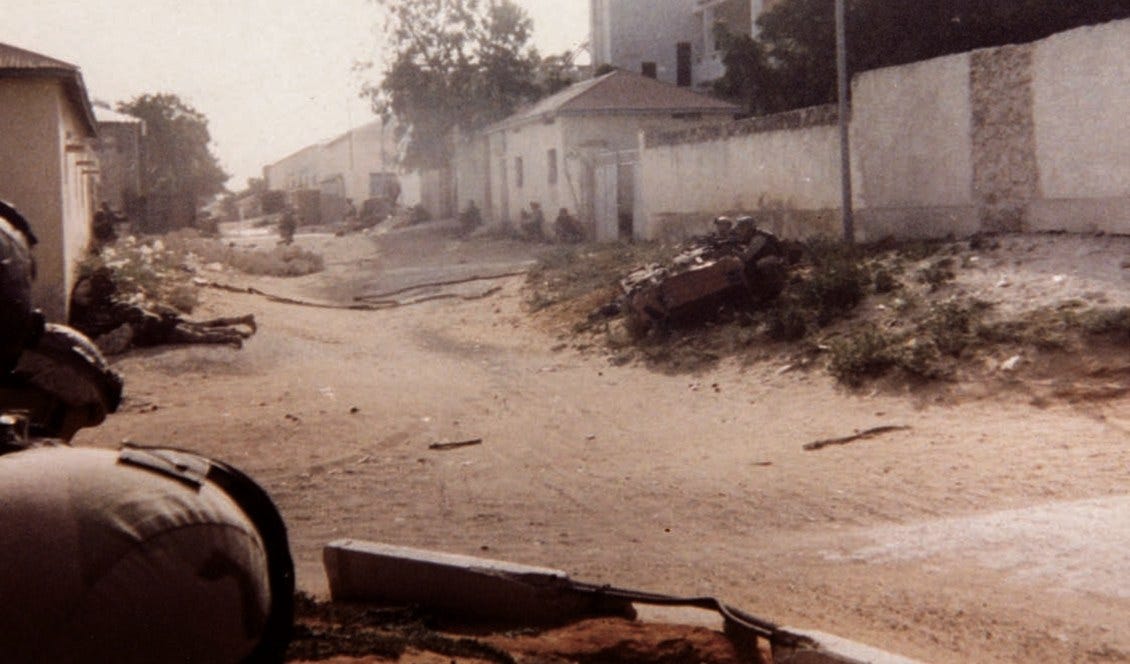

Relief required forces beyond the original assault package. The Army history describes a column incorporating U.S. 10th Mountain Division troops, Malaysian armored personnel carriers and Pakistani tanks. Assembling the vehicles, explaining the plan and coordinating the multinational force took time. The column reached the first crash site during the early hours of October 4; recovery work continued until dawn before the force moved out toward the Pakistani stadium.
The veterans' discussion published by the Modern War Institute on October 4, 2023 adds a leadership perspective. MWI identifies retired Colonel Larry Perino, retired Colonel Lee VanArsdale and retired Master Sergeant Kyle Lamb as participants. Its 2024 republication notes that the conversation was recorded in 2018. The thirtieth-anniversary framing belongs to the 2023 release; the battle itself took place in 1993.
Operational Context
The first helicopter loss turned a moving capture force into a force committed to a fixed location. A downed aircraft and its casualties could not move with the departing convoy. Reaching and holding that site exposed rescuers to further fire, while the second crash created a competing demand for support. The military problem expanded geographically as well as in duration.
Somali fighters used the city's streets, roadblocks and firing positions to complicate movement. Airborne observation could help identify routes, but directions still had to reach vehicle crews navigating at street level. The Army account describes the original convoy's inability to reach the first crash site. The eventual relief operation depended on protected ground mobility as well as aircraft overhead.

Sustainment also became an immediate task. Soldiers at the first site ran short of critical supplies and received water and ammunition by helicopter that evening. That aircraft was itself hit and returned damaged. Keeping the force supplied exposed another crew to the same threats confronting the rescue effort.
My Read
I would put the change of mission at the center of this story. The capture had produced detainees, yet the force still faced its hardest decisions. Recovering the crews and protecting the wounded tied soldiers to locations the initial operation had not set out to hold. The ability to enter the target area and the ability to recover a dispersed force became different tests of the plan.
The relief column is the detail I find most revealing. Its Malaysian vehicles and Pakistani tanks were essential parts of a multinational response, alongside U.S. infantry and aviation. Getting those elements together required time while soldiers were already fighting. That makes rescue planning a command-and-coordination problem: which units can move, which headquarters can direct them and how their vehicles and communications will work together.
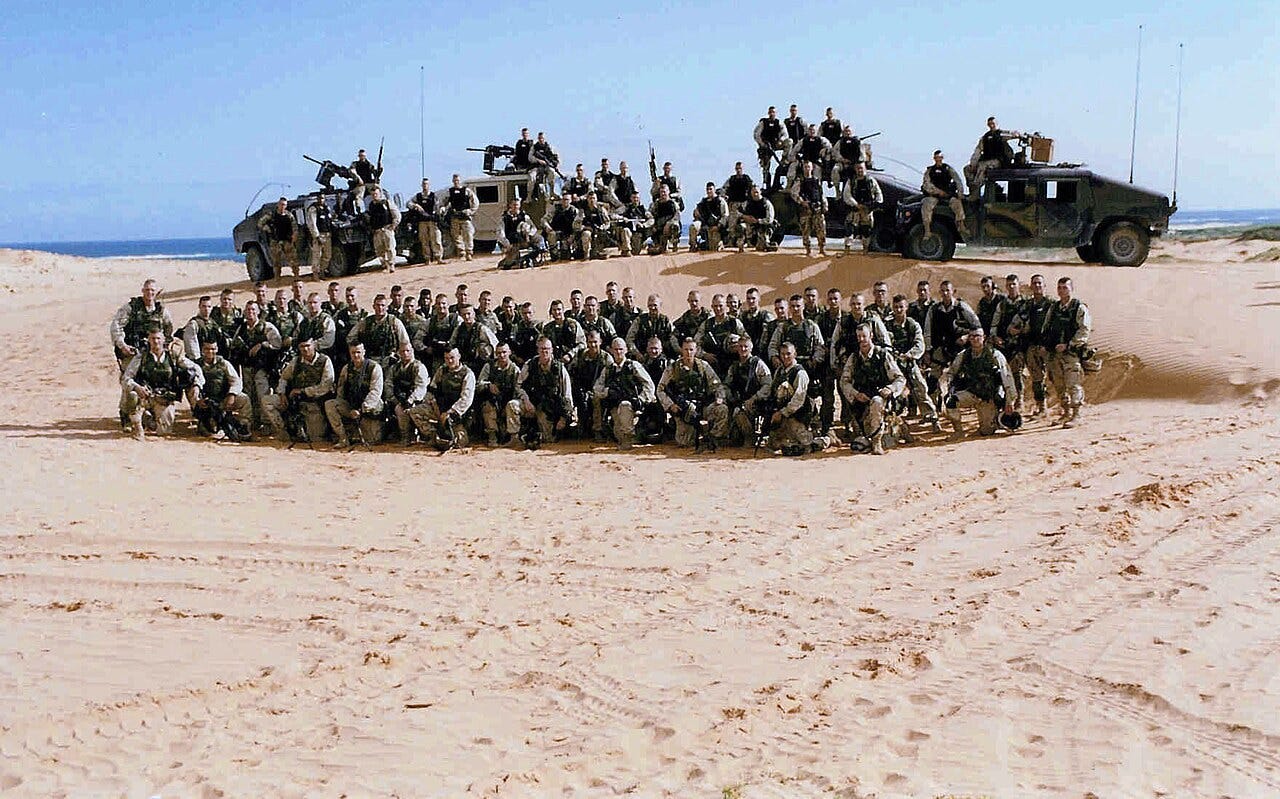

The veterans' recollections are useful for understanding leadership under that pressure. The operational histories give those recollections a sequence against which to read them: repeated changes in what the force had to accomplish and in the support available. The eventual relief of the first site also needs to be understood alongside the second site's different outcome, where a surviving pilot remained in captivity.
For an exercise built around a fast raid, I would ask what happens after a helicopter becomes unavailable and the force has to remain in the city. An evacuation plan earns its value when the available route, vehicle or aircraft changes. Mogadishu shows why that part of the mission deserves the same attention as the assault itself.
What to Watch
Exercise design: whether raid rehearsals test loss of an aircraft, separated casualties and a prolonged ground withdrawal.
Relief coordination: how units establish communications, command relationships and routes with supporting or partner forces before a mission.
Urban sustainment: how water, ammunition and medical support reach troops when the original extraction plan becomes unusable.
Historical interpretation: whether new accounts distinguish the capture objective, the rescue effort and the wider campaign when assessing the battle.
Recommended Sources
Task Force Ranger Operations in Somalia, 3–4 October 1993: Official history dated June 1, 1994; its released overview documents the capture and change of mission.
The U.S. Army in Somalia, 1992–1994: Army historical account of the helicopter losses, resupply, multinational relief and extraction.
MWI Podcast: The Battle of Mogadishu—Thirty Years On: The October 2023 episode page identifies the participants and leadership focus.
MWI Podcast: October 1993: The 2024 republication identifies 2018 as the original recording year.
Sources & Methodology
The operational sequence is drawn from the released 1994 Task Force Ranger history and the Army's published history of the Somalia deployment. The podcast pages establish the participants, recording date and stated leadership focus; the audio was not independently reviewed for this article. My Read interprets the documented changes of mission and relief requirements.
Corrections or source clarifications can be sent through the DefenseHub contact page.
R. Planche · DefenseHub
Discussion about this post