

US ENVOYS REACH MOSCOW AS KYIV-MOSCOW STRIKE PAUSE BEGINS
The Institute for the Study of War reported that US envoys Steve Witkoff and Jared Kushner arrived in Moscow on September 5 as Russia and Ukraine reached a temporary agreement halting long-range strikes on Kyiv and Moscow cities through September 7. Putin separately rejected a broader frontline ceasefire that Ukraine had proposed, according to the same report.
AT A GLANCE
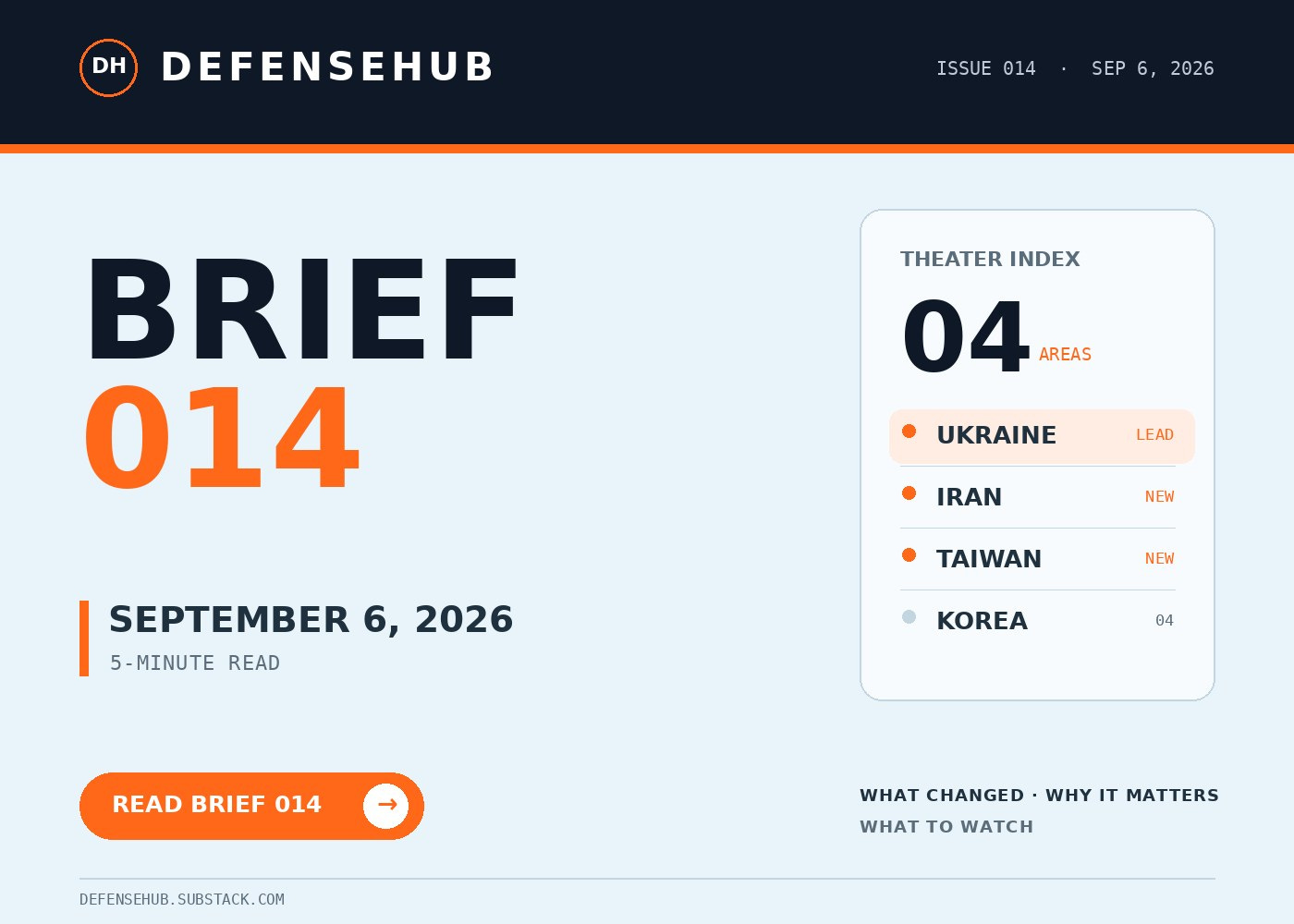
NEW | UKRAINE | ISW reports Witkoff and Kushner reached Moscow as a three-day Kyiv-Moscow strike pause began, while Putin rejected a wider ceasefire.
NEW | IRAN | ISW-CTP assesses Iran is intensifying attacks on US regional assets despite cash flow constraints and Gulf state opposition to escalation.
NEW | TAIWAN | ISW reports China's revised mobilization law could let it requisition civilian ships and drones for a Taiwan invasion scenario.
CARRIED FORWARD, SEP 2 | KOREA | No newer ISW report is available; North Korea continues pressing Washington to accept its nuclear status before any dialogue.
WHY THE MOSCOW VISIT MATTERS BUT DOES NOT END THE WAR
ISW reports that the arrival of Witkoff and Kushner in Moscow coincided with a narrow, temporary halt to long-range strikes against Kyiv and Moscow cities, set to expire September 7. Zelensky confirmed Ukraine would observe the pause through that date.
The ceasefire covers only long-range strikes on two capital cities, not the frontline. Putin told the delegation that Russia did not agree to Ukraine's broader three-day frontline ceasefire proposal, according to the report.
ISW notes Russian forces did not advance anywhere on September 5, and Ukrainian forces struck Russian radar, electronic warfare, and mesh network infrastructure in Bryansk Oblast the prior day. Russian officials meanwhile discussed strengthening air defense using unfit volunteers.
DefenseHub synthesis: the narrow scope of the pause, limited to two cities and days, suggests the delegation secured a confidence gesture rather than movement toward a wider settlement, given Putin's explicit rejection of the frontline proposal.
OTHER SIGNALS
IRAN | ATTACKS ON US BASES CONTINUE AMID CASH CRUNCH
ISW report of September 4 · new
ISW-CTP's September 4 Iran Update reports Iran launched drone and missile attacks on US bases in the UAE, Kuwait, and Jordan on September 3 and 4, part of a months-long campaign to erode US resolve and pressure Washington over the Strait of Hormuz.
The same update assesses Iran faces a severe cash flow crisis from US sanctions and has not increased attacks on commercial vessels despite rising strait traffic, suggesting degraded targeting capability. ISW-CTP notes Iran is constrained by Gulf states opposed to renewed large-scale US operations.
TAIWAN | CHINA EXPANDS LAW TO REQUISITION CIVILIAN ASSETS
ISW report of September 4 · new
ISW's September 4 China and Taiwan Update reports China's National People's Congress passed a revised National Defense Mobilization Law on August 28, taking effect October 1, that broadens conditions for requisitioning civilian transport and drone assets.
The report also cites unnamed US officials telling Reuters that COSCO vessels collect signals intelligence with potential military relevance, allegations both the PRC embassy and COSCO denied. ISW notes COSCO's global port network could support PRC civil-military fusion efforts.
KOREA | PYONGYANG STILL RESISTS DENUCLEARIZATION TALKS
ISW report of September 2 · carried forward
It reported North Korea rejecting denuclearization dialogue and pressing Washington to accept its nuclear-weapon status, while sidelining Seoul from talks.
The carried baseline noted South Korea may de-emphasize complete denuclearization to enable US-North Korea dialogue, and that North Korea reshuffled its defense minister. Watch for any US statement on denuclearization policy or a confirmed Trump-Kim meeting timeline before November's APEC summit.
DEFENSEHUB ASSESSMENT
MEDIUM CONFIDENCE: the Kyiv-Moscow strike pause signals limited diplomatic traction, but Putin's rejection of a frontline ceasefire and continued Russian air defense discussions indicate no near-term shift toward broader de-escalation.
CALL, 30 DAYS: DefenseHub expects no frontline ceasefire agreement within 30 days despite the Moscow delegation visit. Falsified by a confirmed Russia-Ukraine frontline ceasefire agreement announced by either government within that period.
TRACK RECORD
UKRAINE · OPEN: No further ISW reporting on Black Sea Fleet USV strikes appeared in this source; the September 5 update focuses on the Moscow ceasefire talks instead.
IRAN · OPEN: Iran continued attacks on US regional bases rather than a large-scale response or no action, per the September 4 update, but the Ali al Taher-specific response remains unresolved.
72-HOUR OUTLOOK
UKRAINE: Watch whether the Kyiv-Moscow strike pause holds through September 7 or collapses before Witkoff and Kushner reach Kyiv.
IRAN: Watch for further Iranian drone or missile attacks on US regional bases as decision-makers seek to shift the war's trajectory.
TAIWAN: Watch for implementation steps under China's revised mobilization law affecting civilian shipping or drone industry requisition.
KOREA: Watch for any US policy statement on denuclearization or confirmation of a Trump-Kim meeting timeline before November's APEC summit.
SOURCES & METHOD
Sources: Russian Offensive Campaign Assessment, September 5, 2026, Iran Update, September 4, 2026, China & Taiwan Update, September 4, 2026, Korean Peninsula Update, September 2, 2026. DefenseHub separates reported facts, disputed claims, and analytical judgments. Each theater carries the date of its last admitted ISW report, and a theater with no newer report for six days keeps its AT A GLANCE line without a section of its own. TRACK RECORD scores indicators published in earlier issues.
R. Planche · DefenseHub