

DefenseHub · Tuesday · Hot Topics · September 15, 2026
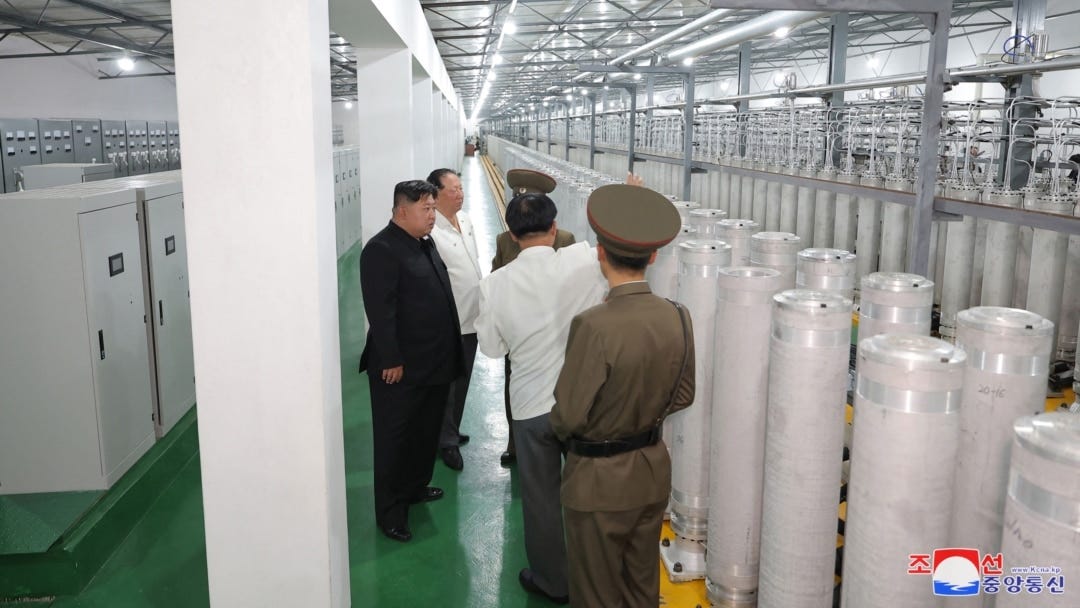
Japan used its September 9 statement to the International Atomic Energy Agency to reaffirm the goal of eliminating North Korea's nuclear weapons. Pyongyang is demanding a different starting point. At the Ninth Congress of the ruling Workers' Party in February, Kim Jong Un tied better relations with Washington to respect for his country's existing status. In July, Kim Yo Jong again declared that nuclear status irreversible. I see the political dispute as an attempt to make continued possession the accepted starting point for negotiations. Understanding that demand requires following how the weapons were built, what has actually been demonstrated, and what recognition could change. (Japan; Reuters; Yonhap)
What We Know
The program began with scientific capacity. Soviet assistance trained North Korean specialists and supplied a research reactor at Yongbyon in the 1960s. Pyongyang subsequently built its own reactor and supporting facilities. By the late 1980s, it had developed the infrastructure needed to extract plutonium from used reactor fuel. Those decades of investment established a domestic industrial base that restrictions on imported equipment could constrain but could not simply erase. (Siegfried Hecker, Stanford)
North Korea joined the Nuclear Non-Proliferation Treaty, or NPT, in 1985 and concluded its comprehensive safeguards agreement in 1992. Inspectors then identified inconsistencies in its nuclear declarations. The 1994 Agreed Framework froze its plutonium production program in exchange for energy assistance and steps toward better relations. That freeze had real effect. The arrangement collapsed during the 2002 crisis over an alleged clandestine uranium enrichment program and reciprocal implementation disputes. Pyongyang announced its NPT withdrawal on January 10, 2003. (IAEA chronology; Congressional Research Service)
The decisive public demonstration came on October 9, 2006, under Kim Jong Il. The Comprehensive Nuclear-Test-Ban Treaty Organization detected the explosion and subsequently radioactive evidence of its nuclear character. Five more tests followed: 2009, 2013, twice in 2016, and September 3, 2017. The last produced the largest seismic signal of the series. Pyongyang described it as a hydrogen bomb; the monitoring record establishes an explosion, without independently revealing every feature of the device. (CTBTO; CRS)
Plutonium was only part of the story. A Stanford research team traced enrichment-related imports through links to Pakistan's A. Q. Khan network from the late 1990s. In November 2010, North Korea showed visiting Stanford specialists a modern uranium enrichment facility at Yongbyon, presented as serving civilian fuel production. This demonstrated another industrial capability relevant to an arsenal, though a managed visit could not establish the full program's scale. (Hecker, Carlin and Serbin)
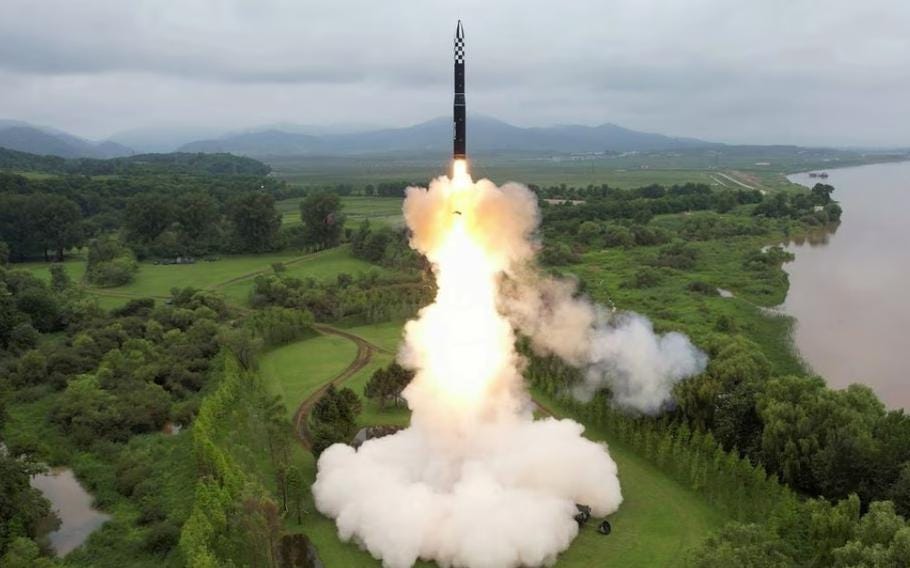
Under Kim Jong Un, the first successful ICBM tests came in 2017, followed by solid-fuel ICBM tests in 2023. SIPRI's June 2026 release estimates that, in January, North Korea had possibly assembled around 60 warheads, with material for at least 30 additional weapons. These are estimates, not an inspected inventory. A demonstrated explosion, a missile flight and a reliable operational nuclear delivery system are separate evidentiary milestones. (CRS; SIPRI)
Operational Context
Recognition has three distinct meanings. The first is acknowledging physical possession. Military planners already have to account for the arsenal. The second is political acceptance: negotiating on the premise that North Korea will retain nuclear weapons. That could shift bargaining toward limits, crisis management and sanctions relief. The third is the formal category of a nuclear-weapon state under the NPT. Conflating these meanings makes a diplomatic concession sound either smaller or larger than it is.
Article IX defines that treaty category by a historical cutoff: manufacturing and exploding a nuclear device before January 1, 1967. Under the existing text, North Korea cannot qualify. A bilateral declaration would not rewrite the treaty. Security Council Resolution 1718 separately requires North Korea to abandon its nuclear weapons and nuclear programs. Political recognition would not automatically remove those obligations or the associated sanctions. (NPT text; Resolution 1718)
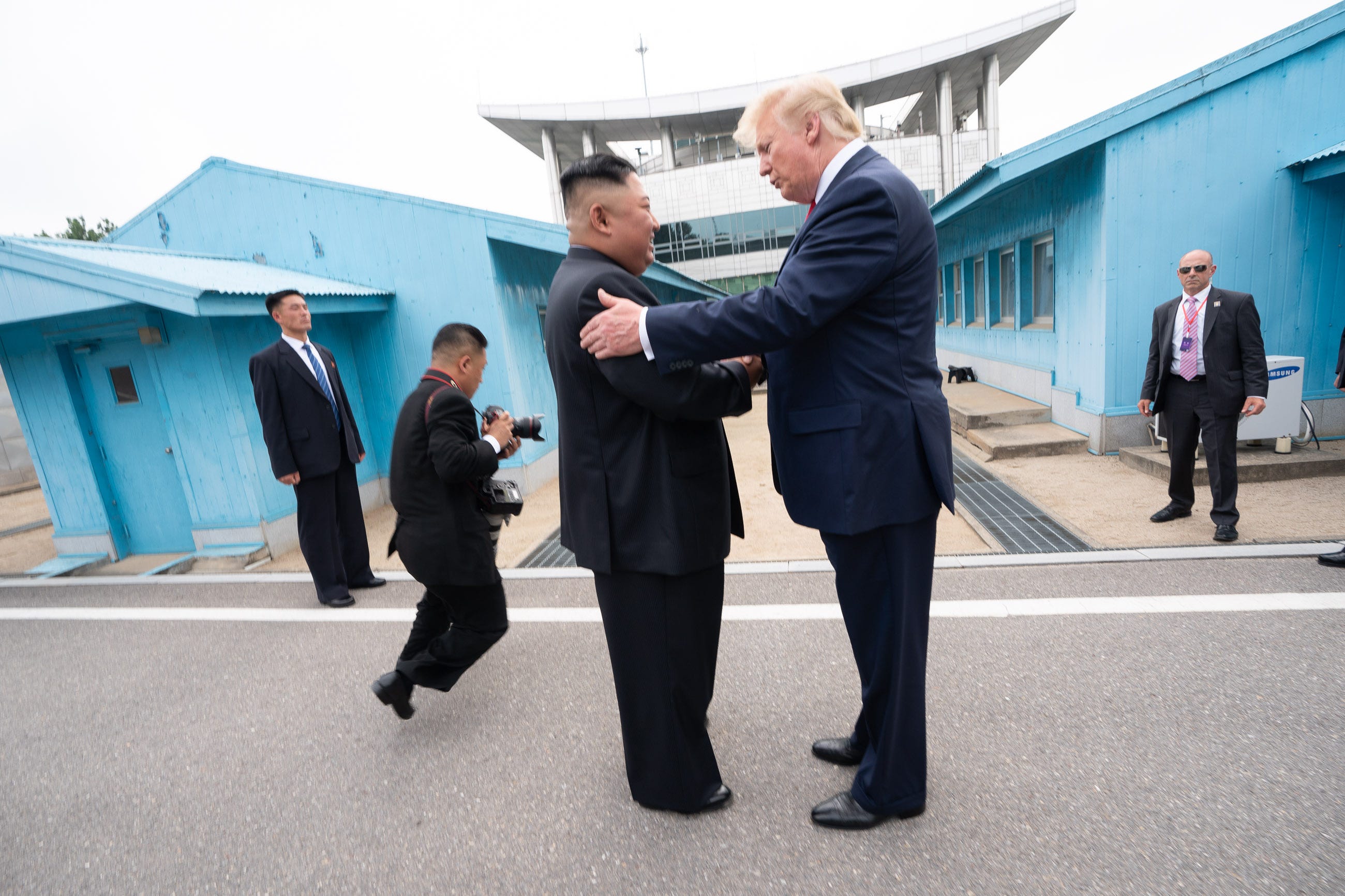
The 2019 Hanoi summit broke down over the scope and sequencing of nuclear concessions and sanctions relief. Kim's February 2026 position, as reported by Reuters from KCNA, coupled respect for North Korea's status with withdrawal of Washington's confrontational policy. On July 27, Kim Yo Jong rejected the ASEAN Regional Forum's denuclearization call and promised continued improvements to nuclear capability. These statements describe Pyongyang's conditions and intentions. They establish neither an agreed negotiating agenda nor international acceptance of its claims. (CRS; Reuters; Yonhap)
There is also an operational reason to take the language seriously. North Korea's September 2022 nuclear law described circumstances permitting use beyond retaliation to a nuclear strike. A 2023 constitutional amendment reinforced its nuclear policy. Combined with missiles threatening South Korea and Japan, that posture makes warning time, communication and judgments about an opponent's intentions central to any settlement. (CRS; Arms Control Association)
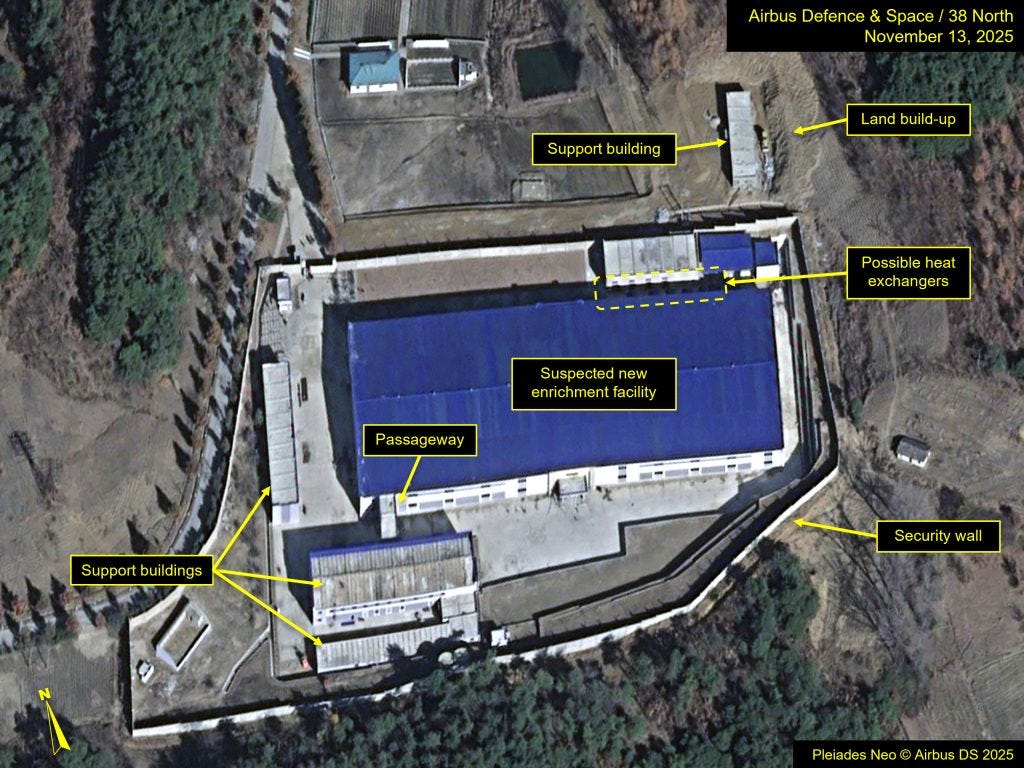
Verification remains a substantial obstacle. In its report for the 2026 NPT Review Conference, the IAEA described indications of activity at nuclear facilities while explicitly warning that lack of access prevented confirmation of their operational status and the nature of the work. A freeze would need to define what is covered and how compliance is checked. Satellite observations alone cannot certify a complete arsenal declaration. (IAEA report, paragraphs 24–28)
My Read
I read the recognition campaign as an attempt to turn accumulated military capability into a durable diplomatic entitlement. If retaining the arsenal becomes the accepted starting point, Pyongyang can seek concessions for restraining its future growth while preserving its existing weapons. That would change the transaction Washington and its partners are being asked to consider. Without verified restraint in return, it would reward North Korea for making disarmament progressively harder.
The strongest argument for a limited agreement is practical. An enforceable cap on production, restrictions on testing and functioning crisis communications could reduce danger before comprehensive disarmament becomes achievable. Refusing to discuss intermediate restraints leaves those potential gains unexplored. The historical record supports taking such measures seriously: the Agreed Framework did constrain plutonium production, even though it did not deliver a lasting settlement. The standard should be measurable restraint, sustained access and consequences for violations. (CRS historical assessment)
The alliance problem is equally concrete. An agreement concentrating on missiles that threaten the continental United States could leave South Korea and Japan exposed to shorter-range nuclear systems. I would expect that imbalance to intensify doubts about American security guarantees and strengthen arguments for greater military autonomy. An eventual decision to acquire nuclear weapons would involve additional political, economic and technical choices. Recognition alone would not make such proliferation inevitable.
Beyond Northeast Asia, the precedent concerns incentives. Other governments could interpret acceptance accompanied by major benefits as evidence that enduring sanctions and building an arsenal eventually secures better negotiating terms. That risk must be weighed against the gains from a verified agreement. The NPT bargain also includes nuclear disarmament commitments by its parties; defending it requires credibility on restraint as well as opposition to additional nuclear possessors. (NPT, Article VI)
Great-power divisions already complicate that balance. Russia vetoed renewal of the UN sanctions monitoring panel in March 2024, while China abstained. The sanctions themselves remained in force. My assessment is that weaker collective enforcement gives Pyongyang more room to resist pressure and seek selective accommodation. Japan's September 9 warning about divisions at the IAEA shows why a unified diplomatic response cannot be assumed. (UN record; Japan)
I would judge any opening by whether verifiable limits become possible while the legal status question remains explicit. Evidence that would improve that assessment includes a credible declaration, inspector access and restraints addressing the threats to regional allies. A summit photograph or softer terminology would establish far less. The meaningful measure is how much danger an agreement removes and how reliably that reduction can be verified.
What to Watch
Negotiating language: whether official texts retain denuclearization as an objective, defer it, or accept permanent possession.
Verification access: whether Pyongyang offers inspectors access and a declaration covering the facilities relevant to any proposed limits.
Alliance coverage: whether discussions address threats to South Korea and Japan alongside intercontinental missiles.
Nuclear activity: independently assessed production and test indicators, with uncertainty preserved rather than inferred stockpile counts treated as fact.
Diplomatic concessions: whether sanctions relief or normalization is tied to verified steps, and whether Russia and China support implementation.
Recommended Sources
Japan's September 9, 2026 IAEA statement: the current diplomatic counterposition.
IAEA report for the 2026 NPT Review Conference: observed activities and verification limits, paragraphs 24–28.
Stanford's history of the nuclear program: the relationship between technical development and diplomacy.
SIPRI Yearbook 2026 findings: current stockpile estimates and their uncertainty.
NPT text and Security Council Resolution 1718: the distinct legal frameworks.
Sources & Methodology
This article uses public records and reporting reviewed through September 13, 2026. Official North Korean statements are attributed, stockpile figures are estimates, and My Read contains the author's assessment.
DefenseHub prioritizes primary sources where available, including official releases, budget and procurement records, legislative documents, technical disclosures, institutional research, and reputable reporting.
Corrections or source clarifications can be sent through the DefenseHub contact page.
R. Planche · DefenseHub
If we formally accept North Korea’s nuclear weapons status, the NPT is more dead than it appears to be. Helping any country with civilian nuclear technology becomes just a wink and a nod approval for a secret weapons program, no?
Not that I have an answer to the North Korea problem. But no answer eventually leads to nuclear weapons proliferation in Japan and South Korea, I think. And more will follow.
Great piece.
Great article, North Korea is an isolated empire, but how long can it continue to exist in its current form? Will the two Koreas ever reunite? There are still so many questions that need to be answered.