

DefenseHub · Saturday · Tactics & Doctrine · October 3, 2026
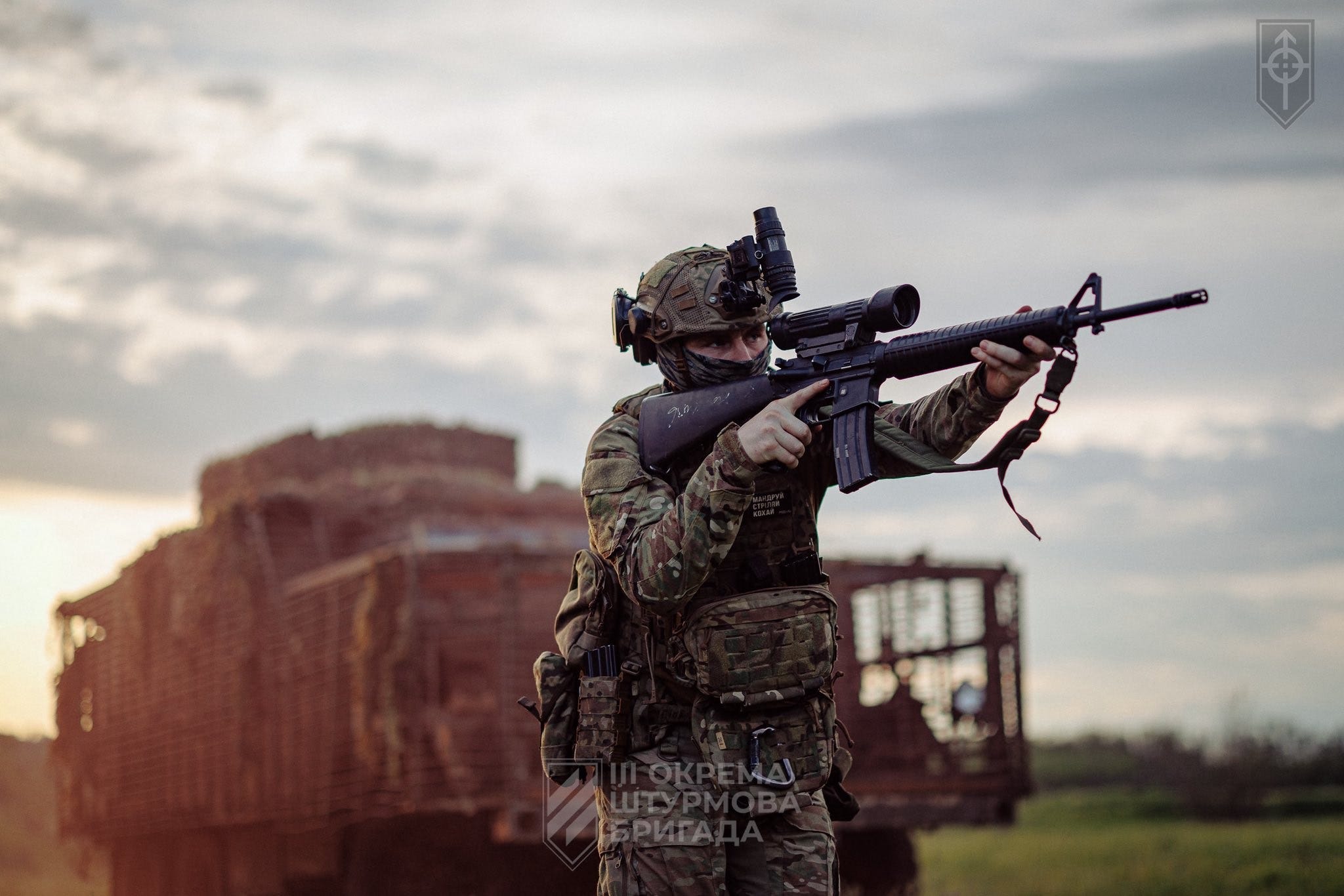
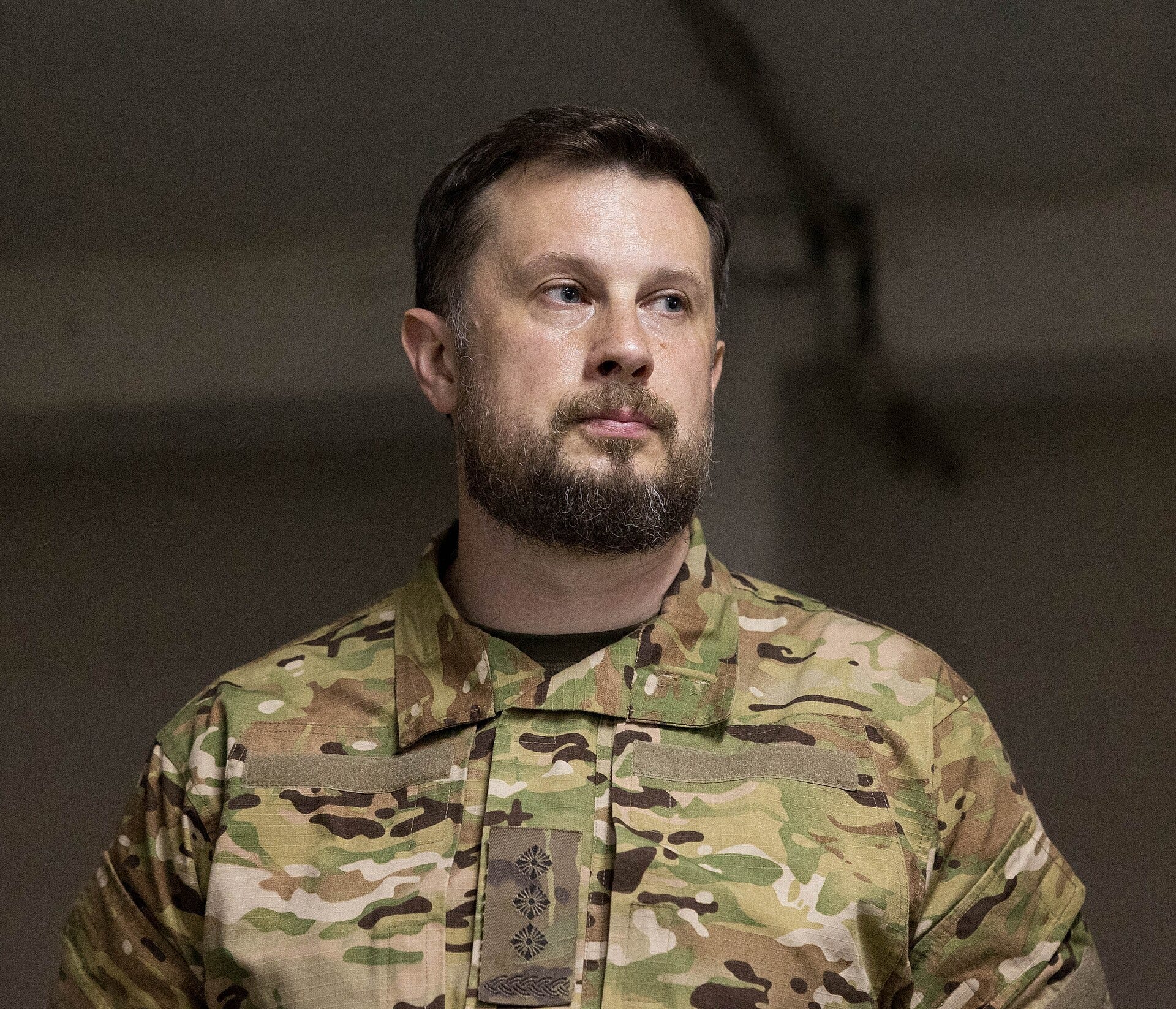
Near Lyman, in Ukraine's Donetsk Oblast, small Ukrainian infantry and assault teams are taking ground inside what Kyiv Independent calls "a dense kill zone of reconnaissance and strike drones on both sides." The operation has a name. On September 15, Andrii Biletskyi, commander of Ukraine's 3rd Army Corps, announced that the corps had launched an offensive "under the name Vivaldi," and reported clearing 75 square kilometers of Russian infiltrators and liberating 10 square kilometers, including the village of Serednie. Kyiv Independent's reporting documents the tactic behind those claims: concealed ground teams paired with drones that scan, strike, and resupply them in place of vehicle convoys. The territorial figures are the corps' own. The tactic is what this piece examines, along with what it does and doesn't tell us about the wider war.
What We Know
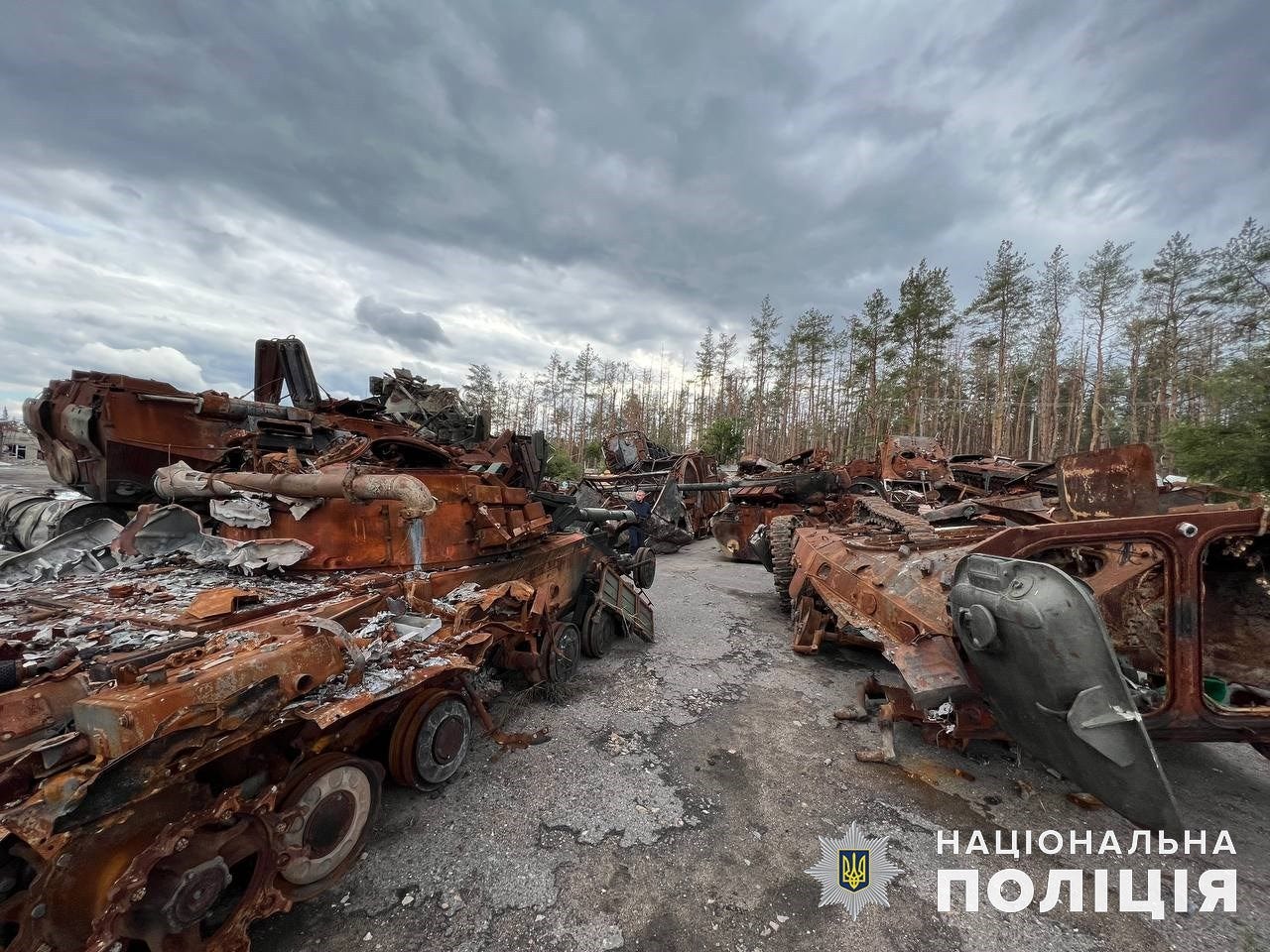
Kyiv Independent's analysis of Operation Vivaldi centers on a "kill zone," a battlefield environment where drones can spot and destroy vehicles or exposed troops almost as soon as they move. That dynamic, per the outlet, has made traditional mechanized assaults largely unworkable for both sides. Instead of massed armor, Kyiv Independent reports that territory near Lyman is being taken by small groups of infantry and assault teams built around concealment. These teams work under drone cover.
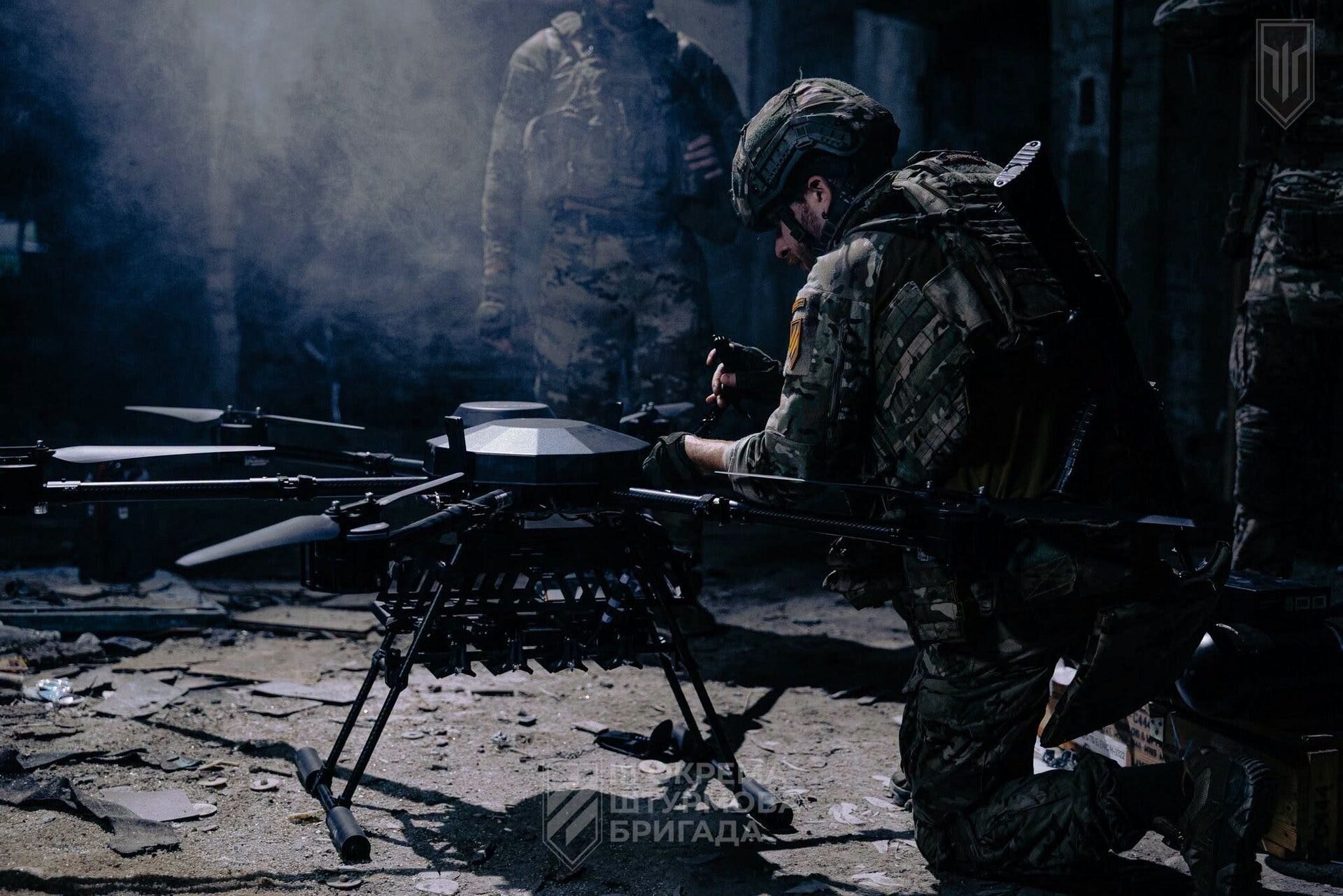
The outlet describes three drone functions working together: drones scan the battlespace for targets, strike enemy positions and shelters, and drop supplies and ammunition to the ground teams. That resupply role matters because it lets small units hold forward ground without the vehicle convoys that would otherwise expose them to the same kill-zone dynamics threatening any attacker. Kyiv Independent calls these combined ground-and-air actions "strike-search actions," run by dedicated clearing teams on the ground working in tandem with drones overhead.
The outlet frames this as a deliberate adaptation to the current battlefield, not an improvised workaround, and the corps attaches concrete outcomes to it. Besides liberating Serednie, Biletskyi said his troops had cleared Novoselivka, Oleksandrivka, Yarova, and the outskirts of Korovii Yar of Russian infiltrators. Independent analyst Clement Molin, working from satellite imagery, assessed that likely more than 200 square kilometers had been cleared, and Robert G. Rose, writing for the Modern War Institute on September 24, put the figure at up to 250. The corps' own tally has kept growing: on September 28, Biletskyi announced three more villages liberated (Ridkodub, Nove, and Katerynivka) and put the total officially retaken at 176 square kilometers. Lyman itself is a separate story: according to Meduza, Russian troops entered the town in early summer and, by July, had been driven out of all but its southeastern edge. Neither Biletskyi's announcements nor Kyiv Independent's analysis lays out a detailed order of battle or a broader operational plan behind Vivaldi. The documented part is the tactic: concealment paired with drones that scan, strike, and resupply the teams on the ground.
Whether that three-in-one drone role is unique to Vivaldi, or whether comparable combined tactics have been used elsewhere in the war, is not something Kyiv Independent's reporting addresses, and this piece does not claim to know either way.
Operational Context
The problem Vivaldi is responding to is documented beyond this one operation. Foreign Affairs reports that drones became central to how both Ukraine and Russia fight, not just a workaround for equipment shortages, and that Russia has a pattern of copying Ukrainian drone innovations and, in places, scaling them faster than Ukraine does. That pattern matters when weighing how durable any single sector's tactical edge is likely to be.
Foreign Affairs also states that despite the "revolution in warfare" framing around drones, both armies still contend with older problems of war: manpower, munitions, force generation, and command and control. Prepared defenses, mines, and artillery still force attackers into narrow assault corridors, and dense minefields still demand dedicated breaching before mechanized formations can advance. None of that is specific to Lyman, but it sets a ceiling on what a tactic like strike-search actions can achieve on its own.
Separately, Rose's Modern War Institute analysis of Operation Vivaldi turns to Ukraine's corps system more broadly. He notes that Mykhailo Fedorov, after his removal as defense minister, recognized that solidifying the corps system was his primary unfinished work. Rose's own assessment is blunt: a handful of Ukrainian corps are highly capable, but many lack the staff training needed to manage a deep fight, and most have not had enough time with their subordinate brigades to rehearse the techniques a breakthrough would require. Ukraine, in his account, still needs an echelon able to command several corps in a single offensive.
Foreign Affairs' reporting on drone adaptation and manpower constraints and the Modern War Institute's account of Ukraine's corps system together describe the gap between a successful local tactic and a scalable operational capability. Strike-search actions, as Kyiv Independent describes them, solve a specific problem: how a small, concealed unit survives and advances inside a kill zone. Rose frames the next step as an operational concept in which several corps infiltrate with infantry and unmanned ground systems, then exploit the openings with mechanized brigades. Nothing in the reporting shows Ukraine has that yet. Kofman's Foreign Affairs essay, published in February, predates Vivaldi, so it cannot speak to whether Russia is already adapting this specific approach.
Those remain open questions, not conclusions this reporting supports.
My Read
A local tactical fix to a specific problem is not yet evidence of a broader shift. Kyiv Independent's account of concealed infantry teams sustained by drones that scan, strike, and resupply describes how Ukraine, on the defensive across most of the front, turned one sector into a local counterattack built on the same drone density that pins down exposed movement on both sides. It is worth describing on those terms rather than as a template for the war. What this doesn't show is scale, or even full causation.
The 3rd Army Corps reports real gains near Lyman, and outside analysts put them higher still. But neither the corps' announcement nor Kyiv Independent's analysis can tell us, and this piece cannot determine from them alone, whether those gains reflect the tactic itself, weaker Russian troop density in that specific sector, or some combination of both. That gap matters because a tactic that works against a thin or degraded defense may not generalize to a more heavily held line.
Rose's Modern War Institute analysis points to a separate, more structural limitation: Ukraine still needs an echelon that can command several corps in an offensive, and most corps have not had enough time with their brigades to rehearse breakthrough techniques. That is a command-and-training gap sitting above whatever strike-search teams can accomplish on their own. Foreign Affairs' reporting adds a second caution that applies regardless of how well this specific tactic performs.
Mines, prepared defenses, and the underlying constraints of manpower and munitions still shape both sides' options, and Russia has shown it can copy and in some cases scale Ukrainian drone innovations once it has seen them in practice. Neither of those facts says anything specific about Operation Vivaldi's own results, but together they argue against extrapolating one sector's reported gains into a claim about the war's broader trajectory.
The narrower, defensible read: the reporting shows that concealment plus drones that scan, strike, and resupply let small Ukrainian units move and take ground in a sector near Lyman where exposed movement draws fire from both sides' drones. Whether that tactic can be run at the scale multiple corps would need for a larger counteroffensive, and whether it depends on local conditions that won't hold elsewhere, are separate questions the corps' claims and the analyses so far do not answer.
What to Watch
Additional reporting documenting strike-search actions used by Ukrainian units outside the Lyman sector would suggest the tactic is spreading beyond one corps.
Russian troop density or defensive strength specifically near Lyman, if reported, would help separate tactical innovation from localized enemy weakness.
Public reporting on Ukraine building a multi-corps command echelon would address the missing piece the Modern War Institute's account identifies for scaling a localized tactical success.
Signs that Russia is adapting or scaling its own version of concealed-infantry-plus-drone tactics would speak to how durable Ukraine's current edge is, per Foreign Affairs' reporting on Russian copying patterns.
Independent confirmation of the corps' territorial claims, through geolocated footage or satellite imagery, would show how much of Vivaldi's reported gain holds up outside Ukraine's own announcements.
Recommended Sources
Kyiv Independent: Analysis: Through the fog of war, Ukraine reveals 'Operation Vivaldi' counterattack near Lyman: the analysis that describes the "strike-search" infantry-drone tactic and the 3rd Army Corps' first reported gains.
Modern War Institute at West Point: An Overture to Victory: Operation Vivaldi and Ukraine's Path to Battlefield Decision: source for the corps-command limitations that bound how far Vivaldi's model can scale.
Foreign Affairs: Ukraine's War of Endurance: context on why mines, prepared defenses, and manpower constraints still limit drone-enabled offensives on both sides, and on Russia's pattern of adapting Ukrainian drone innovations.
Sources & Methodology
This briefing is based on open-source reporting, official releases, procurement documents, defense-industry disclosures, and specialist analysis available at publication time. Claims involving battlefield effects, classified programs, or active operations are treated cautiously unless corroborated by multiple independent sources.
DefenseHub prioritizes primary sources where available, including official releases, budget and procurement records, legislative documents, technical disclosures, institutional research, and reputable reporting.
Corrections or source clarifications can be sent through the DefenseHub contact page.
R. Planche · DefenseHub