

DefenseHub · Wednesday · AI & Technology · September 23, 2026

On Tuesday, Bloomberg reported that US Central Command has changed how it vets targets, seven months after two missiles hit a girls' elementary school in Minab, Iran. Palantir Technologies added new functions that make the targeting software re-examine the intelligence behind a target and flag inconsistencies a human might miss. Palantir is little known outside defense circles, yet its software is now embedded in US targeting operations and used by dozens of allied governments. (Bloomberg; Bloomberg investigation)
What We Know
Palantir was founded in 2003 by Peter Thiel, Alex Karp, Joe Lonsdale, Stephen Cohen and Nathan Gettings. The idea grew out of Thiel's experience at PayPal, where software helped uncover organized fraud by detecting patterns across millions of transactions. After 9/11, the founders argued that intelligence agencies faced a similar problem: warning signs existed, but were scattered across databases that could not communicate with one another. (Britannica; CEO Today)
Traditional Silicon Valley investors were skeptical. According to the founders, Sequoia Capital and Kleiner Perkins declined to invest, and one venture capitalist spent an hour explaining why the company would fail. Thiel and his fund provided roughly $30 million in early financing, while In-Q-Tel, the CIA-backed venture firm, invested about $2 million. The CIA became an early customer and helped shape Gotham, Palantir's intelligence platform. (Fast Company via Yahoo Finance)
The name is a Tolkien reference. In The Lord of the Rings, the palantíri are seeing stones that show events far away, and the danger is that an enemy can control what the viewer sees. Thiel has said he read the books more than ten times and has named ventures after them, including Mithril Capital and Valar Ventures. Palantir adopted "Save the Shire" as its motto and named offices The Shire and Rivendell. Critics have turned the Tolkien reference back on the company. (Wikipedia; The Bulwark)
Thiel is a major reason Palantir is known outside government circles. Born in Frankfurt in 1967, he spent part of his childhood in South Africa and in what is now Namibia, then grew up in California. He studied philosophy and then law at Stanford, co-founded the company that became PayPal in 1998, was Facebook's first outside investor with $500,000 for a 10.2% stake, and founded Founders Fund in 2005. He also secretly spent about $10 million financing litigation that led to Gawker's closure after the site outed him as gay in 2007. (Wikipedia)
His politics matter here. Thiel gave $1.25 million to Donald Trump in 2016, spoke at the Republican convention and joined his transition team. He met JD Vance in 2011, later employed him, and spent about $15 million supporting Vance's successful 2022 Senate campaign. Vance is now vice president. (NPR; CBS News)
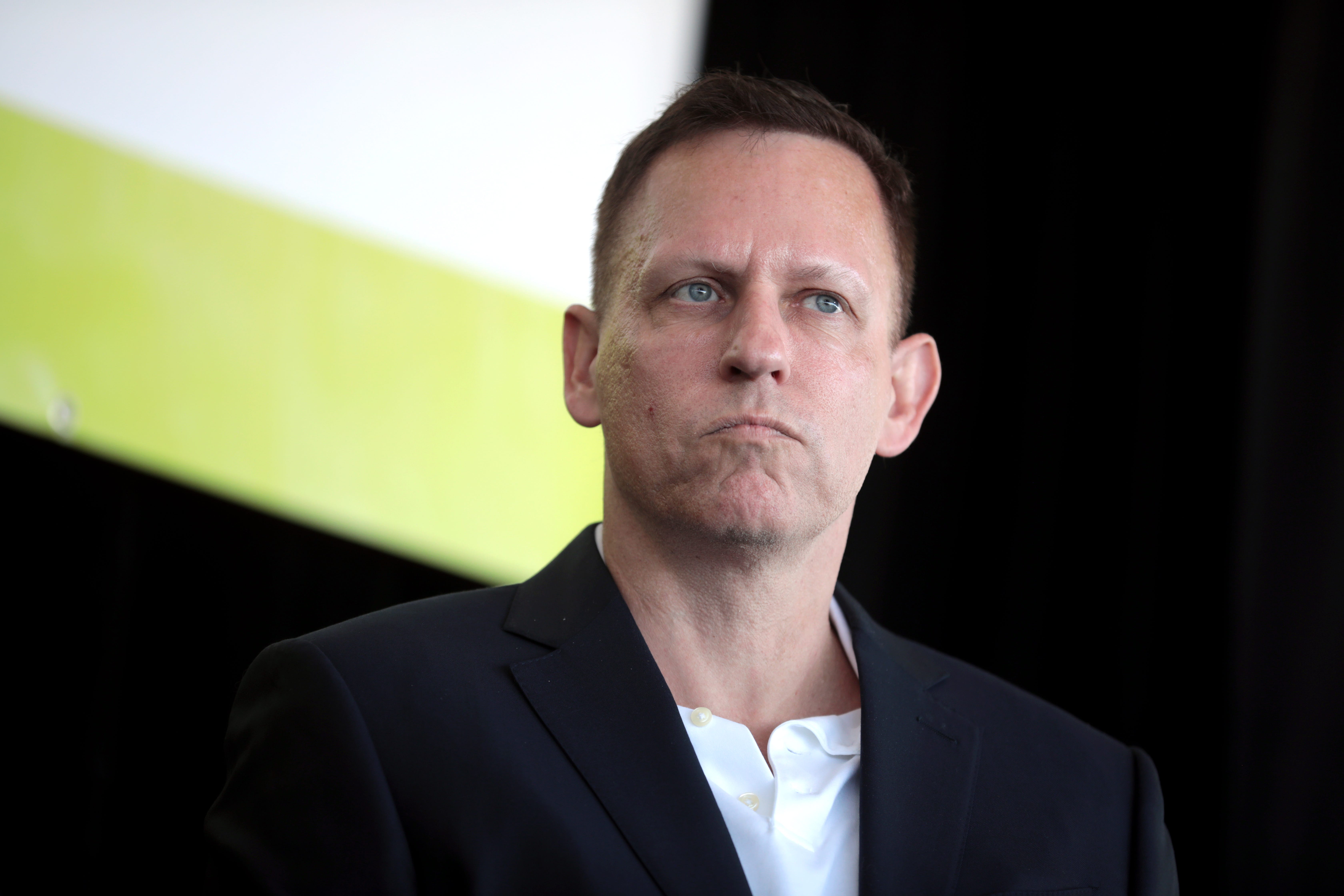

Thiel is chairman, not the operator. Alex Karp has served as chief executive since 2005. His background is unusual for a defense contractor: he studied philosophy, met Thiel at Stanford Law School and later earned a doctorate in social theory with a dissertation written in German. He calls himself a progressive and has donated to Democrats, while arguing that Western democracies should build better weapons than their rivals. Lonsdale founded the venture firm 8VC, Cohen is company president, and Gettings left in 2009. (Wikipedia)
Operational Context
Palantir's role is comparatively straightforward. Palantir does not build sensors, satellites or weapons, and it is not mainly a builder of AI models. It builds the layer in between: software that pulls data out of systems never designed to share it, puts it in one place with a common structure, and lets analysts and AI models work on it. Gotham serves defense and intelligence; Foundry serves companies and civilian agencies.
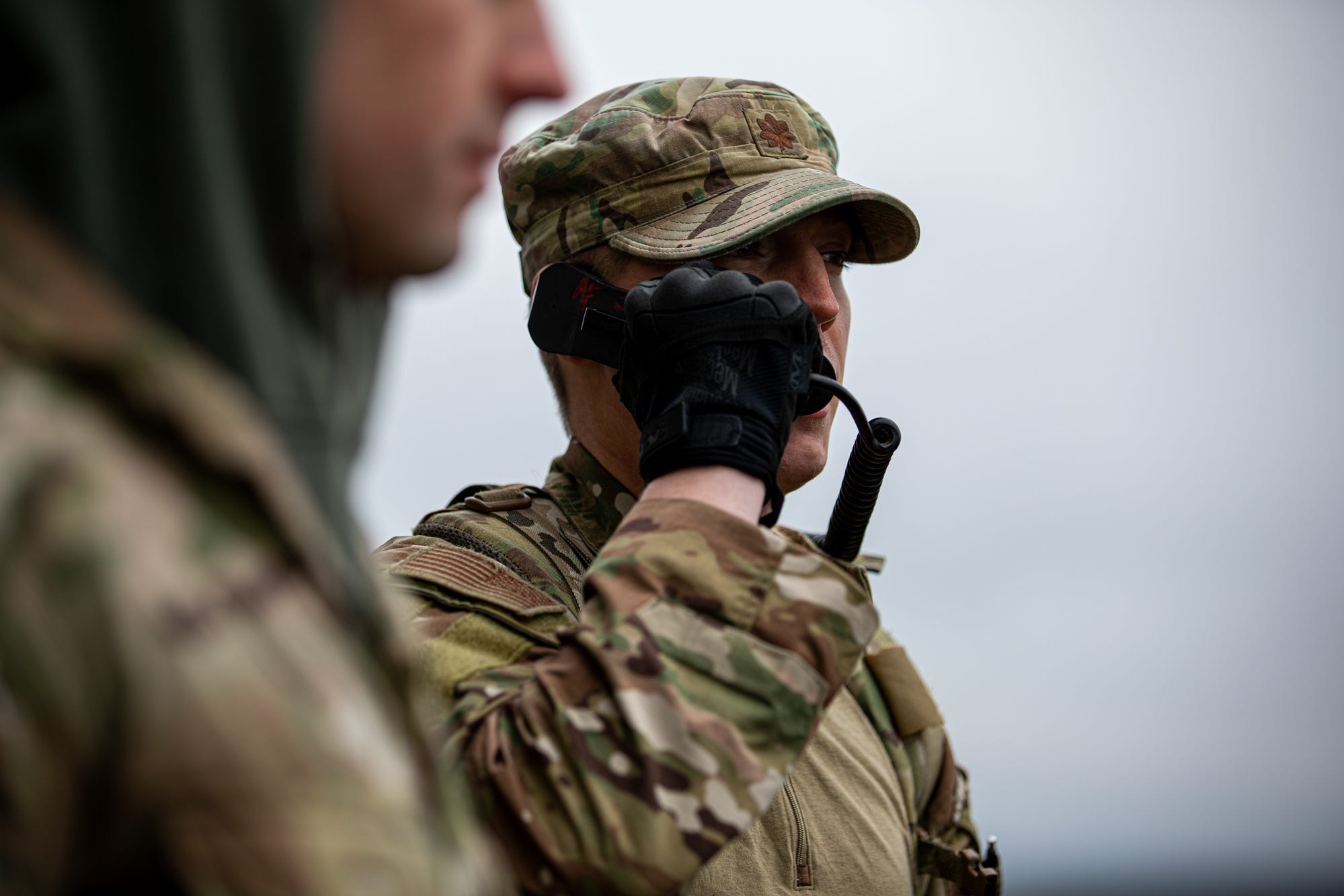
The military centerpiece is the Maven Smart System. Project Maven began at the Pentagon in 2017 with a small team using computer vision to sort drone video. Google was an early partner but declined to renew its contract in 2018 after employees objected to working on targeting. Palantir became the main integrator, the contractor that makes the pieces work together. The system now fuses satellite imagery, drone feeds, radar and intercepted communications in a single interface and proposes candidate targets, allowing an operator to move from detection to a strike recommendation within one system. Commanders, not the software, authorize strikes, and CSIS describes human analysts as responsible for validating what the machine proposes. (CSIS)
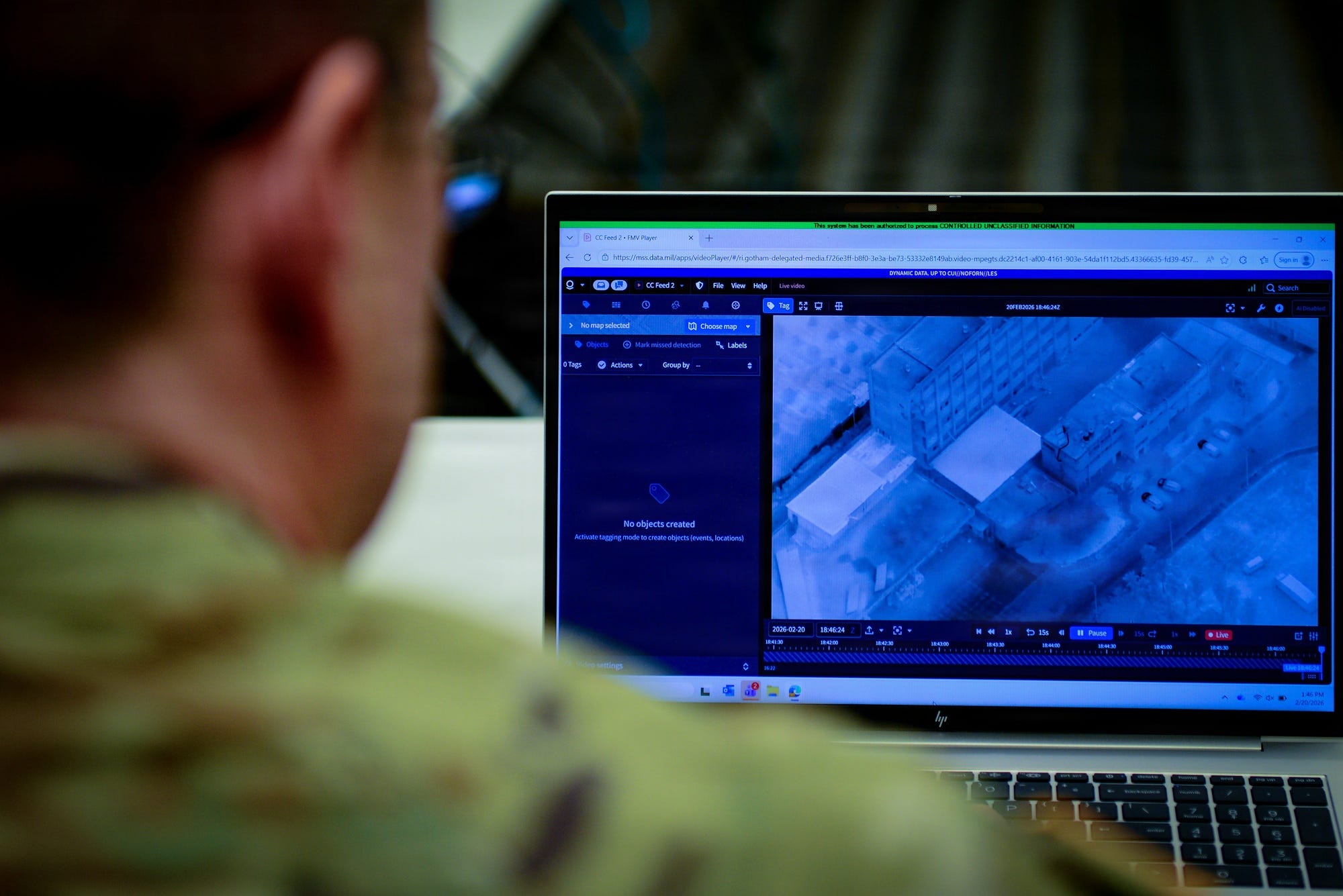
Palantir's military business has expanded rapidly. The Pentagon's contract ceiling for Maven passed $1 billion in May 2025, and NATO bought its own version that year. In July 2025 the US Army folded 75 Palantir contracts into one agreement with a ten-year ceiling of $10 billion, a cap rather than a commitment. In March 2026 the Pentagon made Maven a program of record, a status that establishes it as a formal acquisition program in the Pentagon's budget. The Pentagon's AI chief said the system was used for 13,000 targets in 38 days during this year's Iran campaign, and that troops had shown an "insatiable appetite" for it. (DefenseScoop; Army.mil; Breaking Defense)
The Minab strike is where the debate over speed and accountability becomes concrete. The school was struck on February 28, the first day of the campaign. Counts differ by source: Iranian local officials reported 156 dead, including 120 students and 26 teachers, and other tallies run higher. Most of the dead were children. Reporting on the preliminary Pentagon review points to outdated coordinates that still listed the site as part of an adjacent military compound. More than 160 Democratic lawmakers asked whether Maven identified the target. The Pentagon has not answered, the investigation is unpublished, and no official finding blames the software. (Military Times; TIME)
The customer list runs well beyond the Pentagon. In the United States, Palantir works with the CIA, the FBI, homeland security, health and tax agencies, and its immigration work is the most contested: a $30 million case-tracking contract, and an app that shows officers the addresses of people who may be subject to deportation. Court filings released in July showed that Medicaid records improperly disclosed for immigration enforcement were loaded into Palantir systems, and the company has published a rebuttal to its critics. Abroad, Ukraine has used it for targeting, demining and war crimes work since Karp visited Kyiv in June 2022. Israel signed a partnership with its defense ministry in January 2024, Britain runs an NHS data platform on Palantir software, and German state police use Gotham within limits set by the constitutional court. (NPR; Palantir; TIME; Bloomberg)
Europe is adopting Palantir while also questioning the dependence it creates. On June 16, the French prime minister announced that the domestic intelligence service would replace Palantir with a French firm, arguing that a state should not depend on a supplier that could cut off access. British ministers have signaled they may let the NHS contract lapse, and Germany's cabinet is split over letting federal police use the software at all. (Euronews)
My Read
I read Palantir less as a vendor than as infrastructure, and that is the part worth arguing about. A vendor sells a tool that can be swapped out. Infrastructure is what everything else gets wired into, and once it becomes indispensable, replacing it takes years. The Army agreement that replaced 75 contracts with one, and the decision to formalize Maven as a program of record, point in the same direction: toward standardization on a single supplier. That buys speed, which is real. It also concentrates leverage in a private company whose chairman helped build the current administration.
That is not the same as saying the software killed children in Minab, and I would not make that claim. What the reporting describes is a more familiar kind of failure: an outdated database, a shortened review process and an operational tempo that left less time to catch the error. Software that compresses hours of analysis into minutes does not create those failures, but it amplifies their consequences, because the same bad record can shape more decisions before anyone notices. The European argument is a different one, about dependency rather than performance. A government that runs its intelligence service on foreign software has to trust the vendor and the government with jurisdiction over it. France answered that for its intelligence service this year. Others have not.
What to Watch
Will the Pentagon publish the Minab investigation in full, and will it address what role the targeting software played?
Does the British government trigger the NHS data platform extension before the initial contract term ends in March 2027?
Does Germany's federal government resolve its split and authorize national police use, or block it?
How much of the Army's $10 billion ceiling turns into actual obligations over the next year?
Do other European states follow France in replacing Palantir with domestic suppliers, or will France remain an exception?
Recommended Sources
CSIS, "What Is Maven Smart System, and What Does It Do?": a public explainer of the platform.
Breaking Defense, May 12, 2026: the Pentagon AI chief's own account of usage during the Iran campaign.
Army.mil, July 31, 2025: the Army's announcement of the enterprise agreement, in its own words.
Just Security: legal analysis of the Minab strike, applying targeting law to what is actually known.
Palantir's investor filings and corporate blog: the company's own numbers and its answers to critics.
What stayed with me is the distinction between making military decisions faster and making them better. AI can compress the time between information and action, but that also means errors can travel faster. The real challenge may be building enough human scrutiny into systems designed for speed.
That's an interesting post that makes me want to know more about that kind of technology. It's quite concerning since providing a faster decision makes it more prone to errors.