

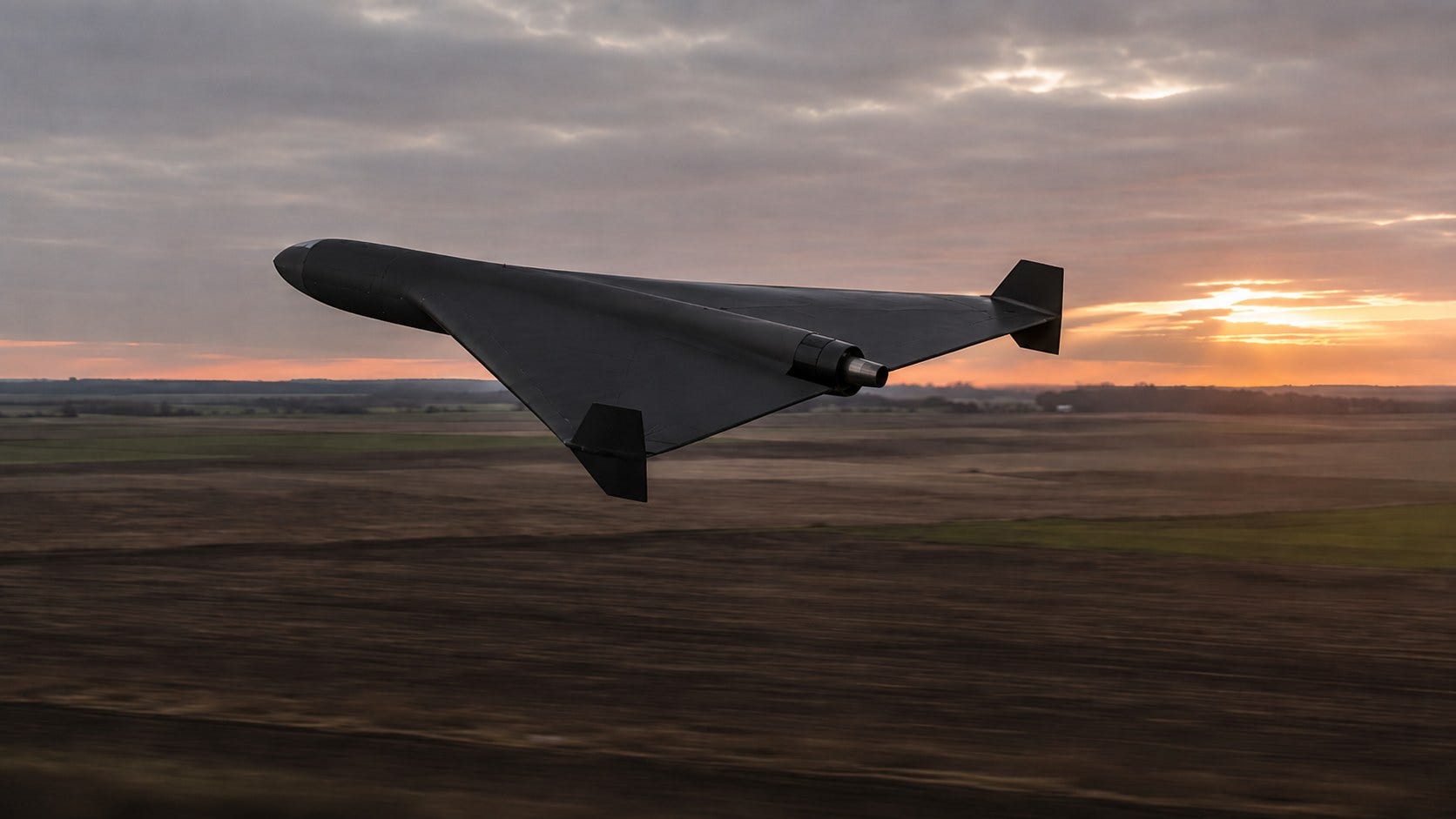
Russia has started sending jet-powered strike drones into Ukraine that cross the border at top speed and then dive to extremely low altitude just before impact, a flight profile that Ukraine's air defenses were not built around. The measurable effect is already visible: interception rates for the jet-powered variants run near 60 percent, against 90 to 95 percent for the piston-engine models. RFE/RL's reporting, which draws on both a counter-drone project manager and an official from Ukraine's military intelligence directorate, HUR, lays out the problem directly: these drones move faster and behave differently in their final seconds than the piston-engine Shaheds Ukraine has spent years learning to shoot down. The shift matters less as a single new weapon and more as a sign that Russia's drone production is evolving faster than Ukraine's countermeasures.
What We Know
Danylo Shenhelskiy, a military liaison manager on a charity project to counter Russian drones, told RFE/RL that jet-powered drones cross into Ukrainian airspace at maximum speed before dropping to extremely low altitude on their approach, with areas within 100 kilometers of the front line facing the highest risk. He said "there is no effective means that can intercept them on a large scale and with certainty." That is a practitioner's judgment from someone working on countermeasures, not a measured rate, and the interception figures reported elsewhere put a number on the same problem.
Two other outlets, both citing Ukrainian air force official Yurii Ihnat, offer numbers that partly overlap and partly conflict. EUobserver reports Ihnat put the interception rate for conventional Geran-2 drones at 90 to 95 percent, against roughly 60 percent for jet-powered variants. The same report puts Ukraine's overall August rate at around 80 percent, citing the Ukrainian Oko Hora monitoring account rather than Ihnat. Ukrainska Pravda, also citing Ihnat, put overall air-defense effectiveness closer to 90 percent while confirming that jet-powered drones were intercepted less often than conventional Shahed-type drones.
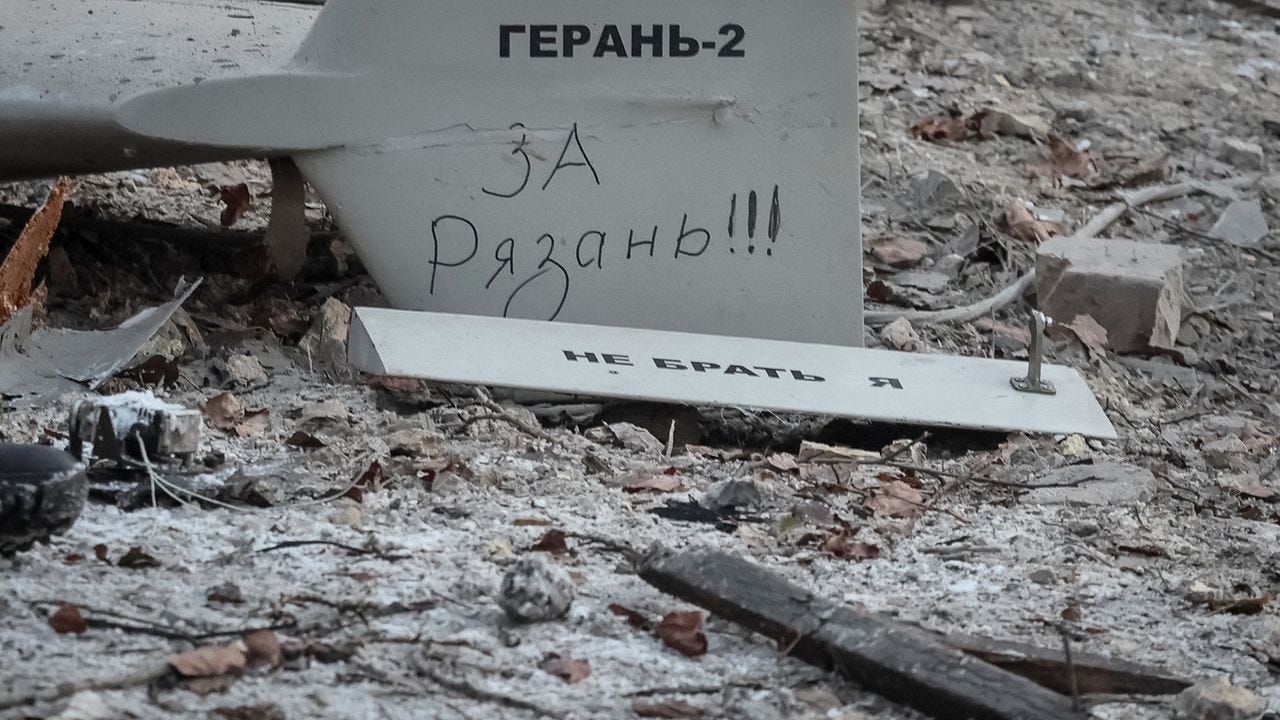
Ukrainska Pravda additionally reported Ihnat describing more than 1,500 drones tracked over a recent four-day span, including roughly 800 jet-powered UAVs, and said Russia deployed five times more jet-powered drones in July than in June. These figures come from the same underlying briefing, not independently audited statistics, and the 80 versus 90 percent gap in overall interception rates is worth naming plainly rather than picking one.
What is consistent across both outlets is the pattern: jet-powered drones are intercepted at a noticeably lower rate than conventional ones, even if the exact overall number is unsettled. RFE/RL also reports that Russian strikes have disrupted train schedules on key routes out of Kyiv and eastern regions, the same lines that carry civilians out of frontline areas daily. A video circulated by Zelenskyy's adviser on defense technology purportedly showed one of these drones striking a locomotive.
Ukrainian officials suggested this might be evidence of a newer variant called the Shahed Seeker, though RFE/RL notes that identification has not been independently confirmed.
Operational Context
Ukraine's counter-drone playbook was built around a slow, loud, predictable target: the piston-engine Geran-2, the conventional Shahed-type drone. Jet-powered variants break that assumption in one specific way. They spend most of their flight at speed and altitude, then dive low only near the target, which shrinks the window that mobile fire teams and interceptor drones have to react.
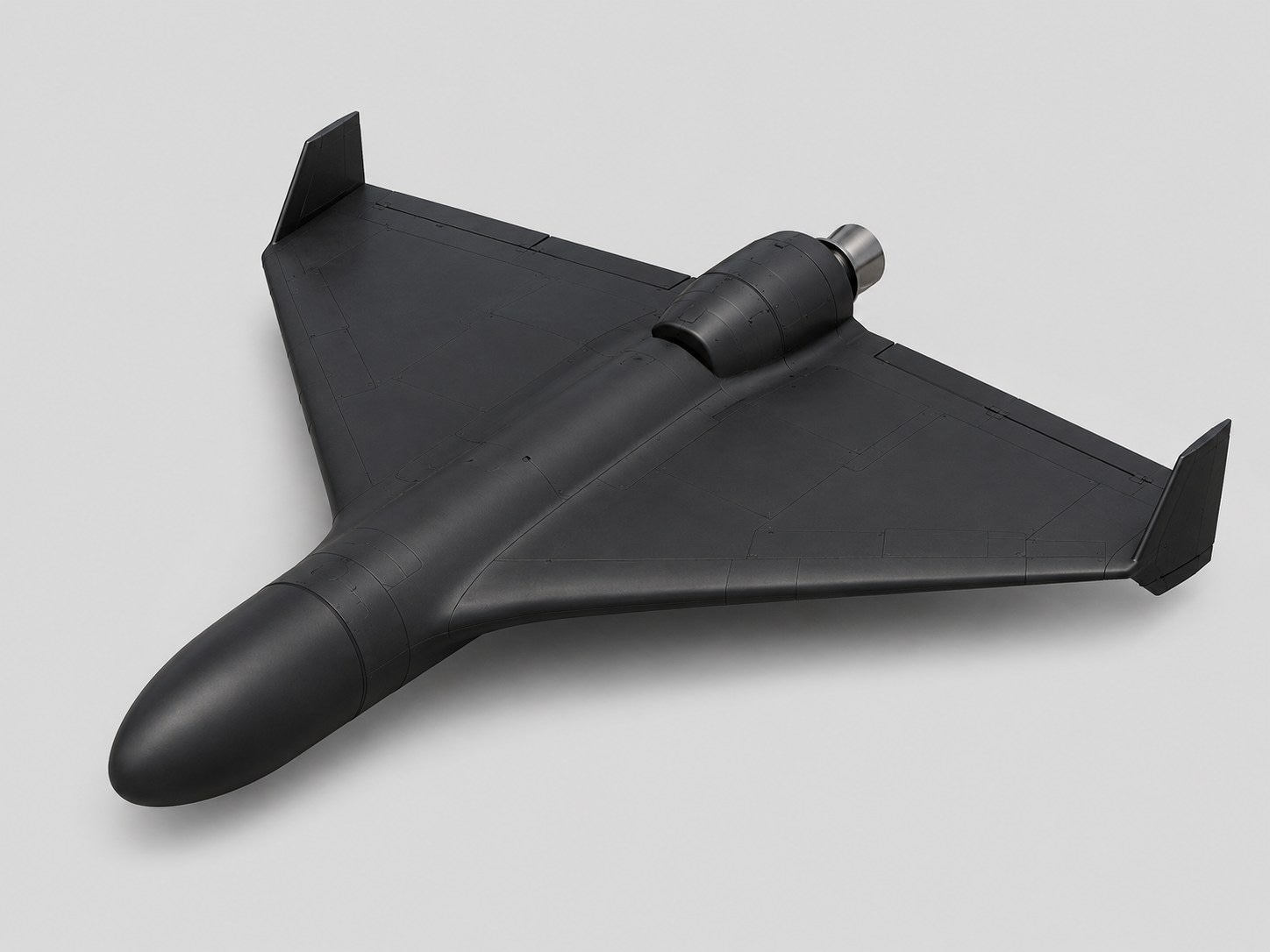
According to Shenhelskiy, stable communications and video guidance also let these drones see the situation and prioritize higher-value targets, which he described as compounding the problem for Ukrainian air defenses even as they adapt. The scale problem is the one the numbers describe: Ukraine still stops most of these drones, but a third more of them get through than of the conventional models, and the volume is rising.
Ukrainian defense planners are described in the same report as racing "to find a practical, cost-effective response," complicated by a shortage of air-defense missiles capable of engaging targets at these speeds. Shenhelskiy said the entire interception-focused military community is currently working on the problem. Russia's side of this shift looks partly like a production advantage. EUobserver reports that Russia's rapid move to jet-powered Gerans shows its defense industry can respond quickly to Ukrainian technological advances.
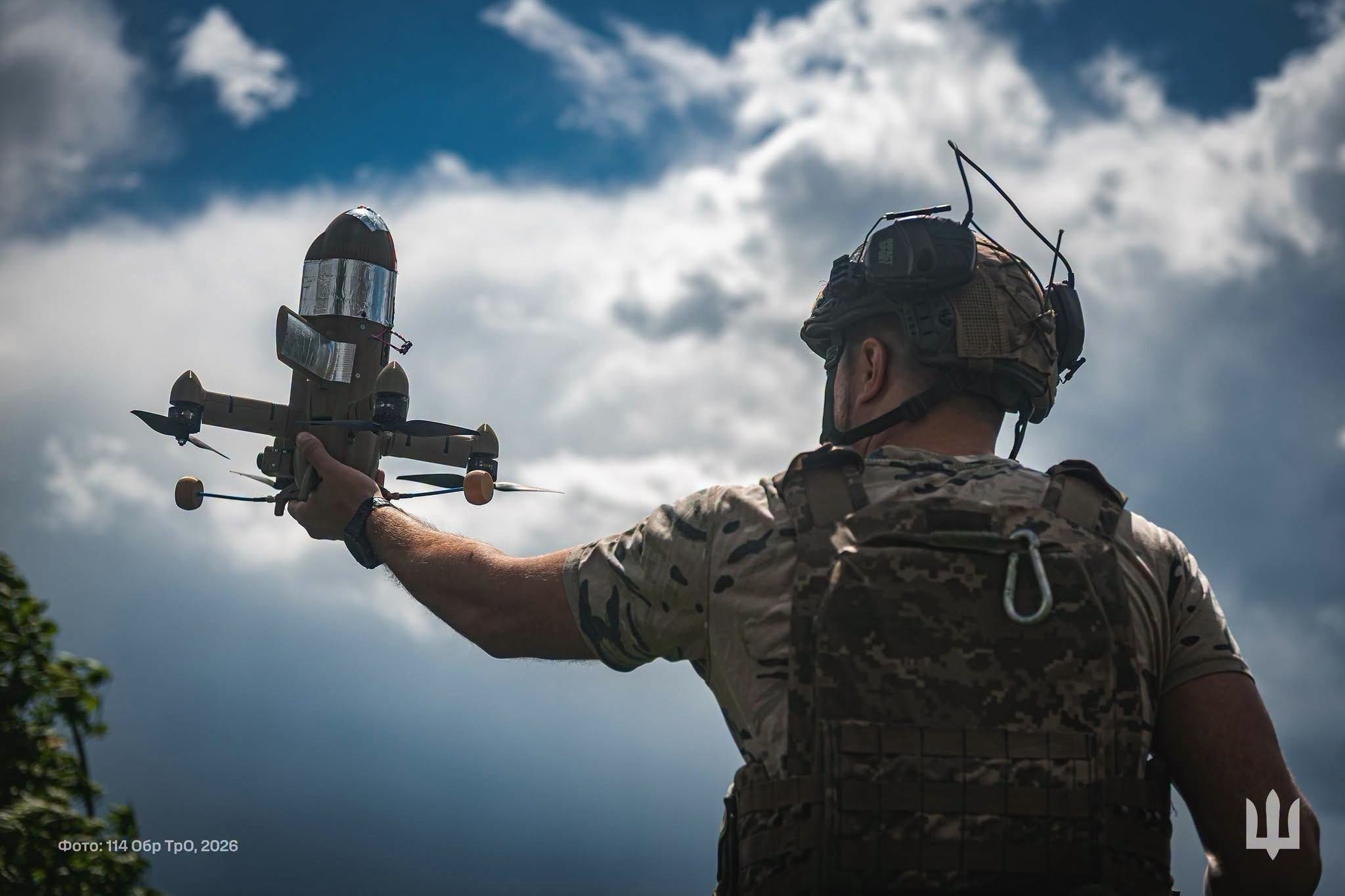
Analyst Maria Snegovaya, cited by EUobserver, argues this speed reflects a dispersed manufacturing structure rather than large centralized factories, a structure she says may let Moscow adjust designs faster. That is Snegovaya's interpretation as reported by EUobserver, not a confirmed account of Russian intent. The problem is not confined to Ukraine's front line. The BBC reported that German officials described a "real, very acute" risk from drone-related incidents near military infrastructure, after an explosive-laden drone was defused close to a Ukrainian cargo aircraft at Leipzig/Halle airport, a hub used by Germany and its NATO allies.
Germany is reportedly moving to expand the BND and BfV intelligence agencies' powers to counter drone threats. That incident is a separate episode from Ukraine's front-line air-defense fight, but it points to the same underlying technology spreading beyond one theater.
My Read
Jet-powered drones have opened a real and specific gap in Ukraine's air defenses, but Ukraine has not lost control of its airspace. That is the narrower claim the evidence supports, short of a full doctrinal collapse. The clearest signal is the consistent pattern across two outlets: interception rates against jet-powered variants sit well below those against conventional Geran-2s, whether the baseline for conventional drones is 90 to 95 percent (EUobserver) or the overall rate is closer to 90 percent (Ukrainska Pravda).
The 80 percent and 90 percent overall figures come from different sources, a monitoring account and Ihnat himself, so they are not two readings of the same measurement. What the numbers do not settle is why the jet-powered interception rate is lower. It is possible Ukraine has reallocated interceptors toward the much higher volume of conventional Geran-2 threats, leaving fewer resources against a smaller but faster jet-powered subset.
It is also possible the lower rate partly reflects a short sample window: Ukrainska Pravda's four-day snapshot of roughly 800 jet-powered drones out of more than 1,500 tracked is too brief a period to generalize into a durable capability gap. Neither alternative is confirmed in the reporting, but both are plausible enough that "widening gap" should be read as a working description, not a settled conclusion. The pace of change is still the most notable part of this story.
A fivefold increase in jet-powered drone use between June and July, reported by Ukrainska Pravda, describes a fast-moving shift in Russian tactics rather than an isolated experiment. The claim that there is no way to intercept these drones "on a large scale and with certainty" is the sharpest line in the reporting, but it belongs to one practitioner and sits against a measured 60 percent interception rate. The defensible reading is degradation, not impasse.
The strongest counterweight to treating this as an emergency is that Ukraine's broader interception effectiveness, per Ukrainska Pravda, still sits near 90 percent, and even the lower 60 percent figure for jet-powered variants means most of them are still being intercepted. Russia has identified and is exploiting a real weakness, but Ukrainian officials describe this as a problem they are actively working on, not one they have given up on solving.
What to Watch
Ukraine's air force is expected to release updated interception statistics that will show whether the roughly 60 percent rate against jet-powered Gerans holds steady, improves, or declines further.
The Shahed Seeker variant referenced by Zelenskyy's defense technology adviser still lacks independent confirmation; a verified seeker-equipped Geran would mark a shift toward more precise strikes on rail and infrastructure targets.
A practical, cost-effective countermeasure has not yet been announced, and RFE/RL's reporting notes Kyiv is still searching for one amid a shortage of suitable air-defense missiles.
Germany's move to expand BND and BfV counter-drone authority follows the Leipzig/Halle incident, making European reporting on further drone incidents near NATO-linked sites worth tracking.
Recommended Sources
Russia's Jet-Powered Drones: A Major New Threat To Ukraine Amid Speeding Arms Race
Russia's rapid shift to jet-powered drones shows its war factories pose wider threat to Europe
UK 'supports Ukraine 100%', Burnham says, after Russia's ...
Russia used five times more jet-powered drones in July than in June, Air Force says
Sources & Methodology
This briefing is based on open-source reporting, official releases, procurement documents, defense-industry disclosures, and specialist analysis available at publication time. Claims involving battlefield effects, classified programs, or active operations are treated cautiously unless corroborated by multiple independent sources.
DefenseHub prioritizes primary sources where available, including official releases, budget and procurement records, legislative documents, technical disclosures, institutional research, and reputable reporting.
Corrections or source clarifications can be sent through the DefenseHub contact page.
— R. Planche · DefenseHub
The inevitable progress of drone warfare, I suppose. I wonder if the 60 per cent interception rate of these new models reflects the full picture. I would imagine Russia is using these more effective jet-powered variants on higher-value (and likely better-defended) targets. If that's the case, then they might be even more potent than the figure suggests.
What about a fixed wing drone, with standard propellers in wings and decent endurance... could be airborne and get into good position before the pursuit starts... in the terminal phase it could activate an small Laval Tobera in its tail( the propellant boost must not be exceptionally fast, on the contrary ,must be just enough to catch the opponent but hopefully not overshoot, propellers could provide additional thrust or even act as aerobrakes in this phase)....
Granted designing an aircraft that efficiently flies in both speed regimes its easier said than done ... yet I believe it could be an interesting and maybe cost effective solution...