

DefenseHub · Thursday · Military Systems · September 17, 2026
In January 2026, after U.S. forces captured Nicolás Maduro in Venezuela, President Donald Trump said a secret weapon he called the "Discombobulator" had disabled Venezuelan equipment. The Associated Press reported the claim from his New York Post interview; its report did not identify the device's technical mechanism. The episode raises a useful question for military systems: what can acoustic weapons actually do? The documented answer starts with communication, warning and deception, while the alleged Caracas device remains unidentified in the public sources reviewed here. (AP, via Times Union)
What We Know
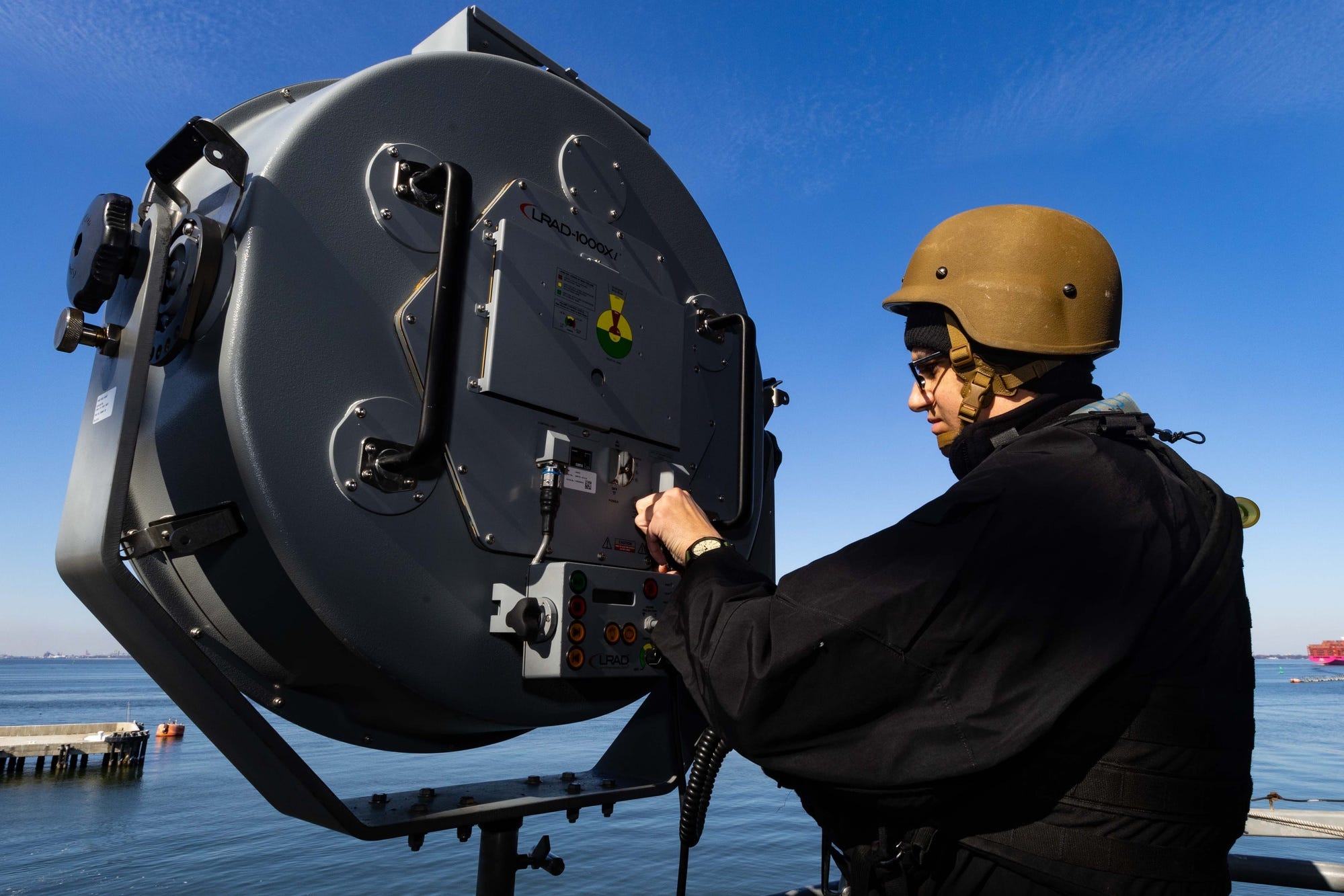
An acoustic system delivers mechanical pressure waves through a medium such as air. The best documented military examples include acoustic hailing devices, or AHDs, which project speech and warning tones toward a selected area. LRAD, short for Long Range Acoustic Device, is a commercial product family within that category. Its purpose can be to attract attention and communicate instructions; sufficiently intense sound can also cause pain or hearing injury. Those functions should be assessed separately. (Joint Non-Lethal Weapons Directorate; OHCHR guidance, section 7.8)
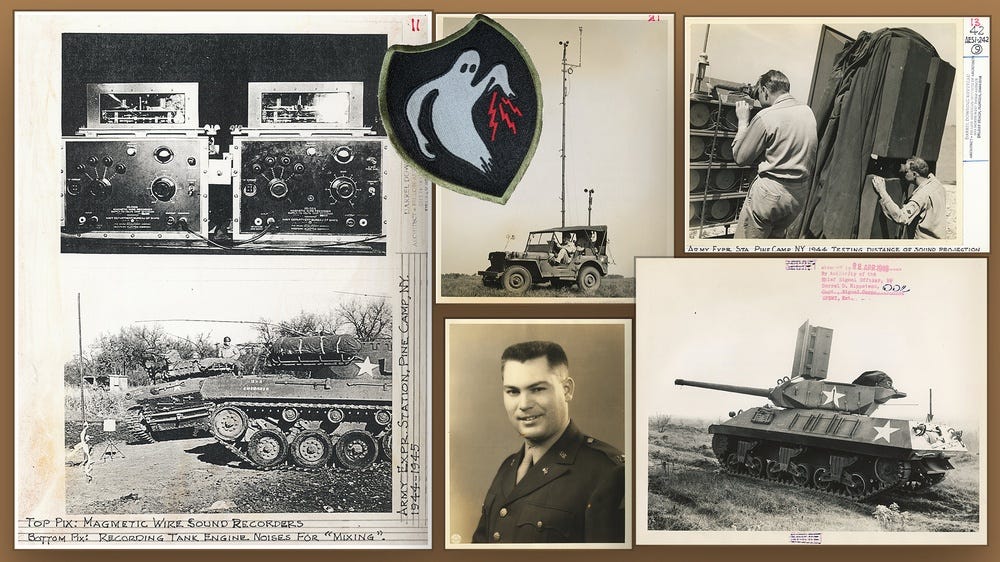
Military use of projected sound has a longer history. During World War II, U.S. forces trained in sonic deception at Pine Camp, now Fort Drum, using recordings of military activity and vehicle-mounted projection equipment. The intent was to make an opposing force hear formations that were not actually present. That was deception through sound, rather than an attempt to injure listeners. The historical connection is the deliberate shaping of what an opponent perceives; it does not establish a lineage of secret incapacitation weapons. (U.S. Army)
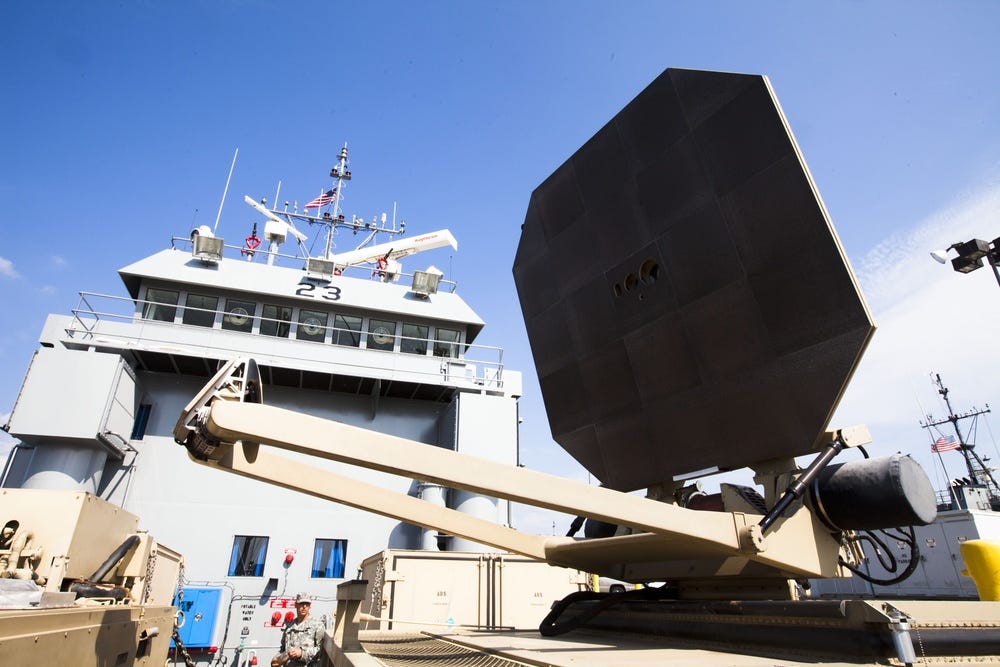
Modern LRAD development followed the 2000 attack on USS Cole, according to manufacturer Genasys's corporate filings. The underlying requirement was practical: ships needed a way to communicate clearly with approaching small craft at greater distances. By 2009, a U.S. military demonstration at Quantico described Navy and Marine Corps purchases for shipboard, vehicle and checkpoint applications. This was already an established force-protection problem well before the Venezuela controversy. (Genasys filing; official demonstration report)
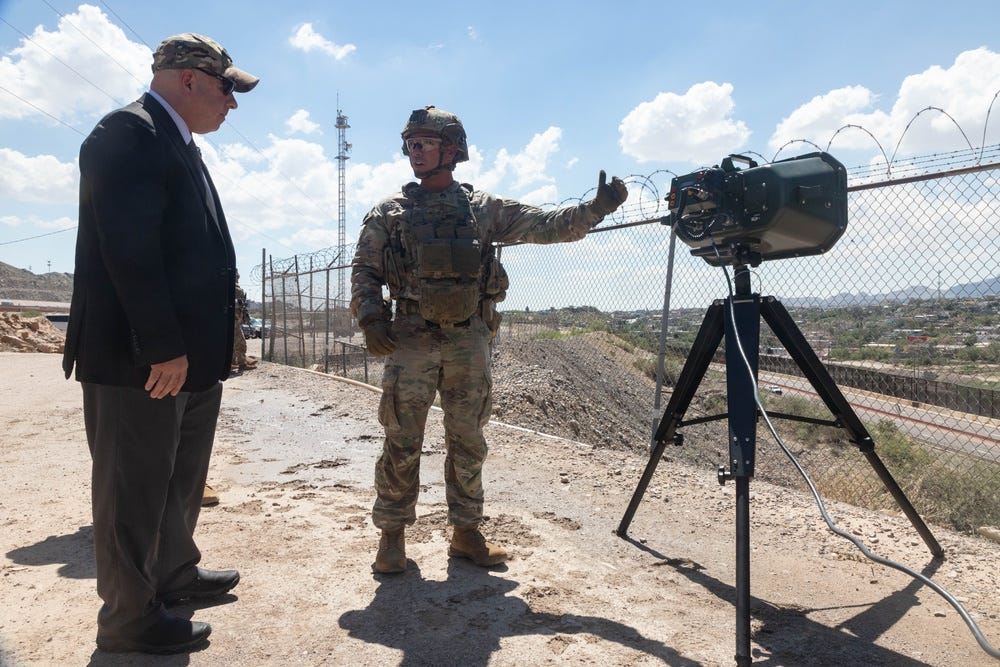
The Army's fiscal 2025 procurement justification describes an AHD requirement for intelligible voice commands at least 300 meters away with background noise at the target. That is a communication specification, not a radius of incapacitation. Range figures for different models, missions and environments are not interchangeable. A listener hearing a signal, understanding a command and suffering an injury are three different outcomes. (Army budget, item M11309)
Documented users extend beyond the United States. In December 2024, Genasys announced a three-year maintenance renewal for LRAD systems deployed by the Indian Navy. Separately, its June 2024 announcement described an order from Damen for Germany's F126 frigate project, with planned integration into the ships' Thales combat-management system. The Indian agreement concerns an installed fleet; the German announcement is evidence of an acquisition and integration plan, not proof that the future frigates were already operational. (India maintenance agreement; F126 order)
Operational Context
The first technical distinction is between acoustic energy and electromagnetic energy. The U.S. Active Denial System, demonstrated publicly at CENTCOM in 2008, uses millimeter-wave electromagnetic energy to produce a heating sensation at the skin. It is not a sonic weapon. Its existence demonstrates a different physical mechanism, not the identity of anything used in Venezuela. Treating every unfamiliar effect as "sound" collapses separate technologies into one misleading category. (CENTCOM)
Electronic warfare and cyber operations also need their own explanation. Interfering with an electronic system and projecting pressure waves toward people are different technical tasks. A June 5, 2026, U.S. Cyber Command posture statement explicitly acknowledged integrating cyber effects and intelligence into Operation Absolute Resolve in Venezuela. That is an official acknowledgment of a cyber role. The statement does not identify a particular acoustic device or explain every reported equipment failure. It cannot be used to assign a mechanism to Trump's account. (USCYBERCOM)
Acoustic systems face physical constraints. Sound spreads and attenuates; terrain, weather, buildings and background noise affect what reaches a listener. Very low frequencies are difficult to confine into a narrow beam with compact equipment, while higher frequencies face different propagation losses. A major technical assessment by physicist Jürgen Altmann found weak support for many dramatic infrasound claims and emphasized these engineering tradeoffs. Published in 2001, it provides a physics baseline, not an inventory of present classified capabilities. Audible, infrasonic and ultrasonic systems should therefore be assessed through their measured effects and operating conditions. (Science & Global Security)
The human-effects question is equally material. UN guidance on less-lethal weapons identifies hearing damage among the risks of acoustic devices. In a military application, this makes operator training, exposure control and the position of friendly personnel part of the system assessment. "Less lethal" describes an intended role; it does not guarantee harmlessness. Claims of reliable, reversible incapacitation need evidence beyond a loud demonstration or a witness describing an unfamiliar sensation. (OHCHR, section 7.8)
My Read
I see the strongest documented case for military acoustics in force protection and communication. A ship or checkpoint that can make an intelligible warning has another way to manage an uncertain approach before a decision about force. The operational benefit depends on whether the message reaches the intended people and whether they can understand and act on it. Volume alone is an incomplete measure of military utility.
That leads to a different procurement question from whether a device is impressively loud. I would look for evidence of intelligibility in representative noise, dependable operation from the intended platform, usable controls and a sustainable maintenance burden. A successful demonstration proves performance under its own conditions. A fielded capability needs to work repeatedly with the crew, power supply, transport and support arrangements available to the unit. The Army's communication requirement and the Indian maintenance agreement illustrate why those mundane details matter.
Integration may offer more practical improvement than a dramatic new label. The F126 announcement describes remote systems linked to shipboard combat management. Great Lakes Sound & Vibration (GLSV) describes a Phase II Small Business Innovation Research contract for an acoustic-hailing prototype. Its Focused Enhanced Acoustic-Driver Technology project aims to improve projection and intelligibility in a more compact package. These are identifiable engineering objectives. They should be tracked as development and acquisition work until operational evidence supports stronger conclusions. (GLSV prototype announcement)
The same integration creates a human judgment problem. A sensor can help an operator aim a hailer, but failure to comply with a broadcast does not, by itself, establish hostile intent. Noise, hearing impairment, language and the listener's ability to move can all complicate the response. My assessment is that a useful acoustic system must improve the information available to a commander, while keeping the limits of that information visible.
For the Venezuela allegation, a technical identification would require evidence connecting a named system, a physical mechanism and an observed effect. The available official acknowledgment of cyber support does not supply that chain for a sonic weapon. The defensible conclusion is narrower: acoustic military systems are real, internationally acquired and useful for specific tasks; the public sources reviewed here do not establish that one produced the effects attributed to the "Discombobulator."
What to Watch
Any official technical disclosure that identifies the alleged Venezuela system and distinguishes a stated capability from an independently demonstrated effect.
F126 integration and acceptance evidence, separating a supplier's order announcement from delivery, testing and operational use.
Results from acoustic-driver prototype programs, especially independently reported intelligibility, portability and reliability improvements.
Military acquisition documents that specify operating conditions and distinguish communication range from human-effects claims.
Published operator guidance and human-effects research addressing hearing risks, exposure control and the limits of interpreting noncompliance.
Recommended Sources
U.S. Army fiscal 2025 procurement justification: search for M11309, Acoustic Hailing Device, for the operational requirement.
Jürgen Altmann, Acoustic Weapons: A Prospective Assessment: a foundational technical review of mechanisms, effects and physical limitations, published in 2001.
U.S. Army history of sonic deception at Pine Camp: the historical use of recorded sound to misrepresent military activity.
USCYBERCOM's June 2026 posture statement: the official acknowledgment of cyber support to the Venezuela operation.
UN guidance on less-lethal weapons: section 7.8 addresses acoustic devices and their risks; its direct context is law enforcement.
Sources & Methodology
This article uses public records, technical research and reporting reviewed through September 13, 2026. Supplier disclosures establish what companies announce, not independent proof of performance. The Venezuela weapon claim remains unverified in these sources. My Read contains the author's assessment of military systems.
DefenseHub prioritizes primary sources where available, including official releases, budget and procurement records, legislative documents, technical disclosures, institutional research, and reputable reporting.
Corrections or source clarifications can be sent through the DefenseHub contact page.
R. Planche · DefenseHub