

DefenseHub · Monday · Geopolitics · September 21, 2026
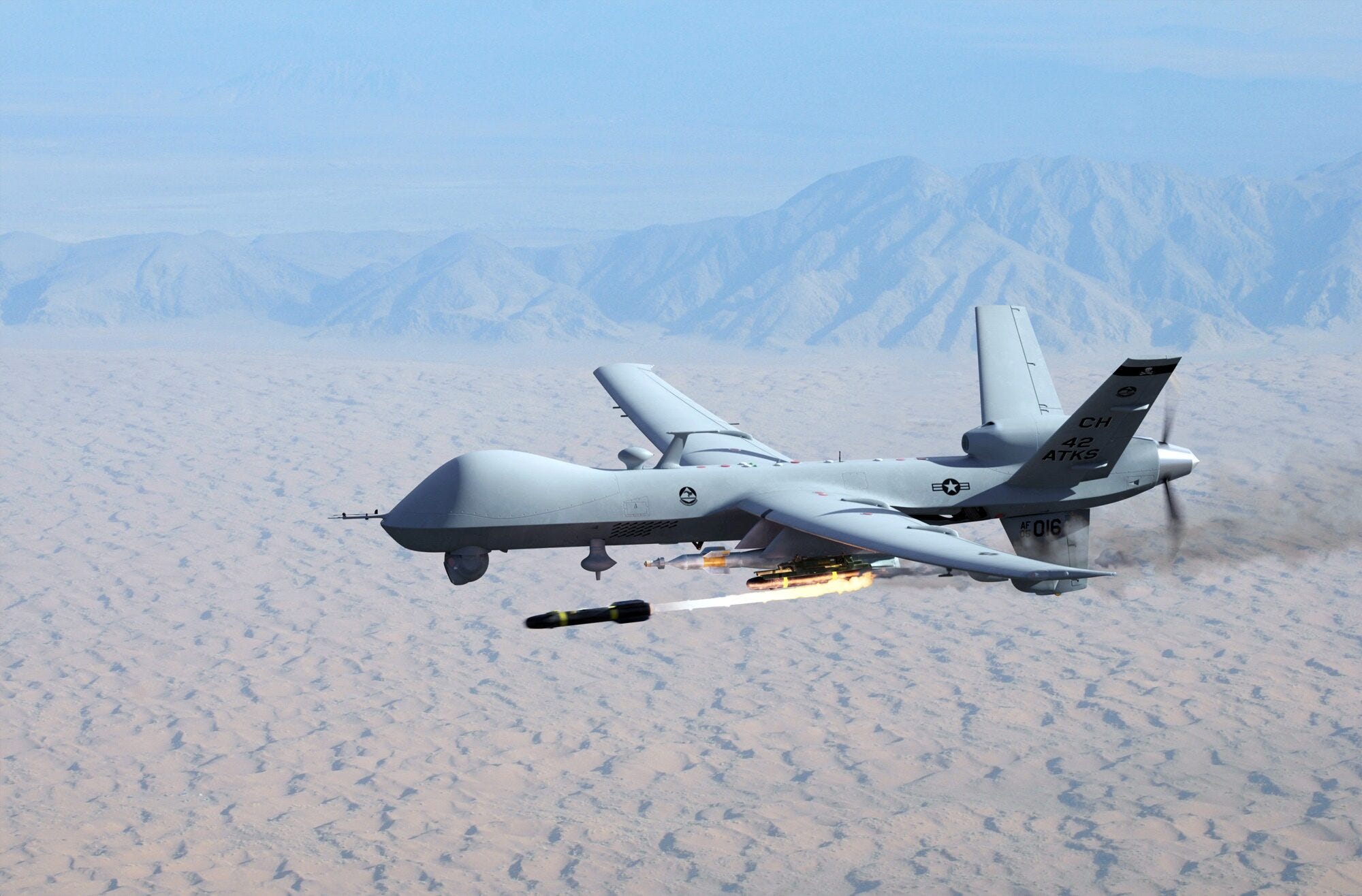
The arrival of MQ-9 Reapers would give Washington something more durable than a carrier visit or a temporary show of force: the ability to watch selected areas for long periods, fuse intelligence with partner governments and, when authorized, strike a target with the same aircraft that tracked it.
That capability is expected to move into South America as the United States expands joint operations against trafficking networks. It also arrives as Washington openly seeks to restore its primacy in the Western Hemisphere and limit the influence of powers from outside the region. The immediate mission is counternarcotics and counterterrorism. The larger consequence is a stronger US military position in the competition for access, intelligence and political alignment.
The Capability Coming South
CNN reported on September 18 that the US military is expected to transfer MQ-9 Reapers operating over Africa to US Southern Command. Six sources familiar with the planning described the broader move. One of them said it could involve "most" of AFRICOM's Reapers, but the number remains undisclosed and the Pentagon has not confirmed that characterization.
The distinction matters, but it is not the center of the story. Whether the final package contains a few aircraft or most of AFRICOM's contingent, SOUTHCOM is preparing to gain a long-endurance platform that combines intelligence collection with precision-strike capability.
The destination and support arrangements have not been disclosed. CNN linked the plan to anticipated operations in the region, including possible missions in Ecuador. The report also said that some aircraft could be sent to the Middle East instead, which shows that the allocation was still being negotiated when the story was published.
The transfer would expand a presence already taking shape. Colombia agreed in September to borrow three MQ-9A aircraft, according to CNN. SOUTHCOM established the Joint Task Force Western Hemisphere on August 4 as its operational arm for the region. US and Ecuadorian forces have also conducted joint maritime interdictions, including an August operation against a vessel accused of supporting a trafficking network.
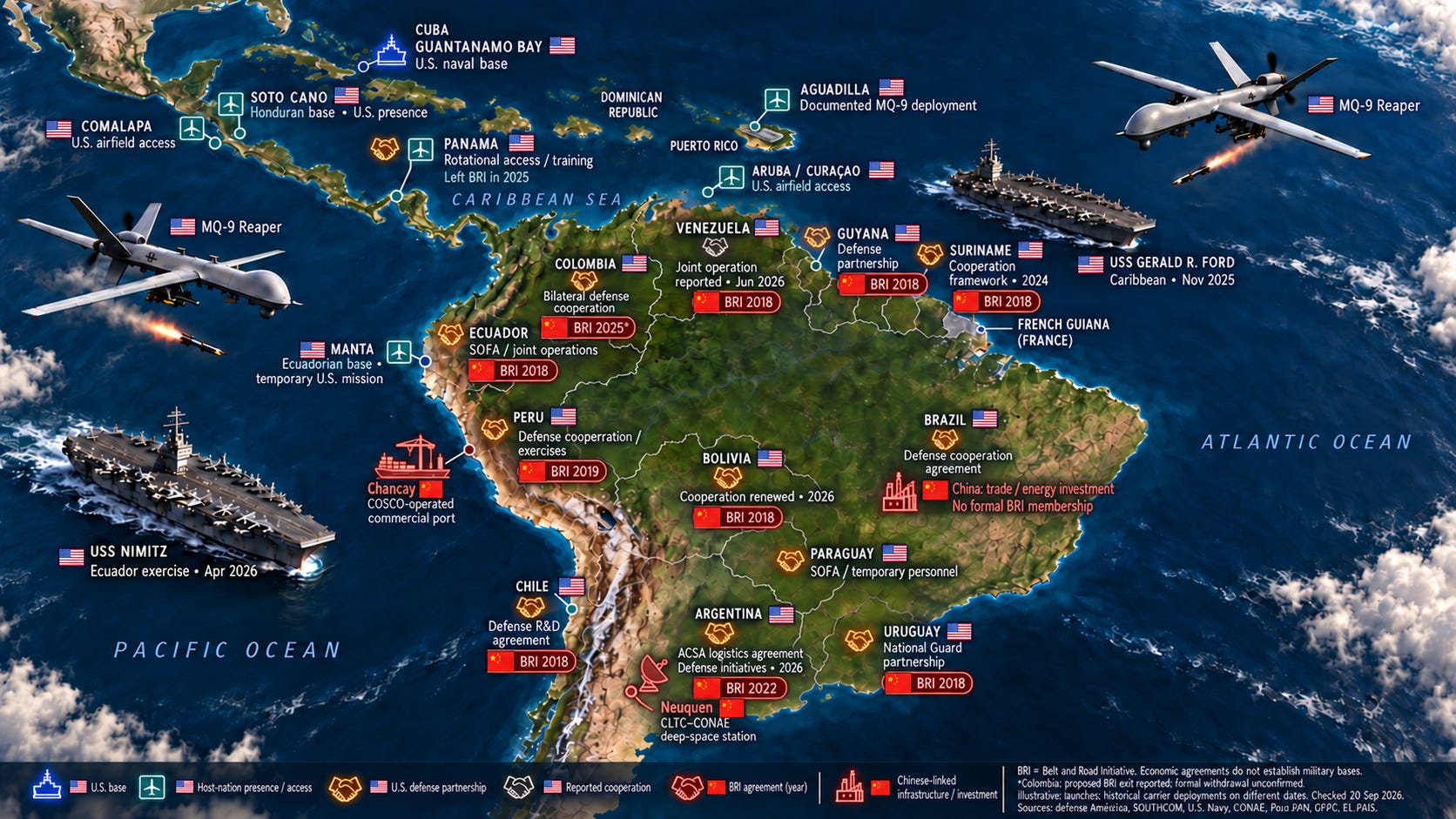
Counternarcotics is a concrete mission. It is also part of a campaign that has moved far beyond conventional law enforcement. By September 20, US forces had conducted 69 strikes against vessels the administration described as connected to trafficking, killing at least 231 people, according to the Associated Press. In many cases, the administration released little public evidence supporting its identification of the people or vessels targeted.
See also:


The Mission and the Strategy
The drug campaign explains where Reapers can be employed. Current US strategy explains why Washington is moving military capacity into the hemisphere.
The 2025 National Security Strategy calls for restoring US preeminence in the Western Hemisphere under what it terms a new corollary to the Monroe Doctrine. It directs the government to shift military presence toward the region, expand access in strategic locations and make it harder for non-hemispheric competitors to increase their influence.
The document links security partnerships and assistance to the reduction of outside influence over ports, military facilities, infrastructure and strategic assets. It also calls on US officials to use pressure and incentives when dealing with partner governments. Washington has published this policy in its own strategic guidance.
SOUTHCOM applies the same logic. Its current priorities state that the command supports efforts to prevent China, Russia and Iran from gaining influence or control over key terrain and infrastructure. Its August statement on cooperation with Ecuador placed counternarcotics operations, migration control and the limitation of foreign geopolitical interference within the same partnership.
Public reporting assigns the Reapers to counternarcotics and counterterrorism missions. Their broader geopolitical meaning comes from the strategic setting in which the transfer is taking place. Their presence strengthens the military and intelligence relationships through which Washington competes for influence.
The China Factor
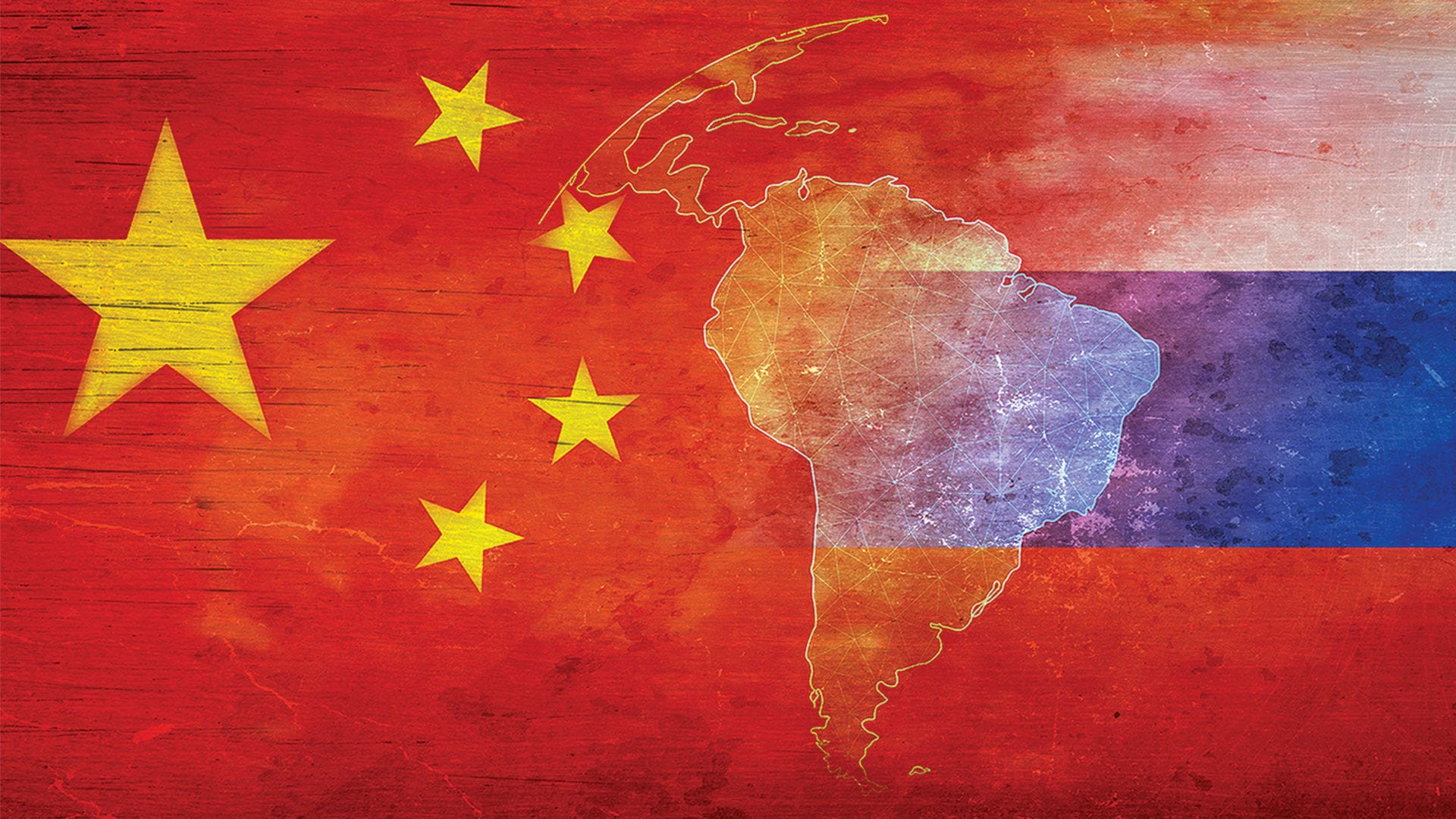
China's regional weight is primarily economic, technological and diplomatic. The United Nations Economic Commission for Latin America and the Caribbean describes the relationship as increasingly mature, complex and wide-ranging, covering trade, investment, financing, infrastructure, science and technology.
Ecuador illustrates that complexity. It has a free-trade agreement with China, participates in Belt and Road cooperation and has Chinese-linked projects in energy, mining, electricity and infrastructure. In June 2025, the two governments described their relationship as a comprehensive strategic partnership and signed a new Belt and Road cooperation plan. At the same time, Ecuador is deepening operational security ties with the United States.
South American governments often combine Chinese trade and investment with US training, intelligence and military support. The competition emerges when either relationship begins to affect decisions about ports, telecommunications networks, critical minerals, surveillance systems or access for foreign forces.
The Reapers add weight to the US side of that equation. An MQ-9 deployment requires permissions, logistical support, data links, maintenance and some degree of intelligence coordination. Those arrangements can produce relationships that outlast the operation that created them.
Brazil Raises the Stakes
Brazil is South America's largest country by territory, population and economy. It will hold the first round of its general election on October 4, two weeks after the Reaper plan became public.
The timing comes during a period of pressure from Washington involving tariffs, visa restrictions and an attempted visit by US officials who intended to scrutinize Brazil's electoral system. Brazil denied the officials visas in July, according to The Washington Post.
On September 19, CNN Brasil reported that Brazil's intelligence agency had warned the government and the electoral authorities about the risk of US interference in the election. The assessment cited Washington's stated objective of reducing rival powers' influence and restricting their access to strategic assets, natural resources and infrastructure in Latin America.
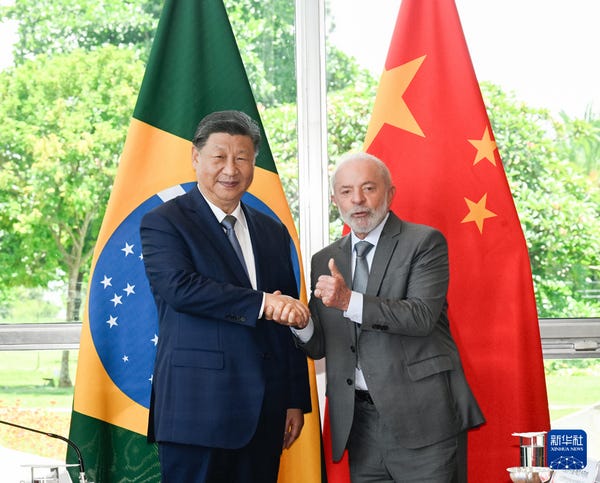
The drone plan has added a security dimension to those concerns. Officials in Brasília have raised questions about sovereignty and possible espionage as SOUTHCOM prepares to expand long-range surveillance in the region. Reported destinations do not include Brazil. Even so, the regional presence would increase US intelligence capacity near a country with deep economic ties to China, major reserves of critical minerals and decisive influence over South American diplomacy.
The election magnifies the timing. Washington is applying economic, diplomatic and institutional pressure at the same time that it expands military capacity in the region. In South America's largest country, those instruments now meet at a politically sensitive moment.
What the Reaper Presence Changes
The strategic value of the MQ-9 lies in persistence. A carrier strike group can deliver overwhelming power, but it is expensive and temporary. Reapers can support a smaller and more durable network of surveillance, targeting and intelligence-sharing arrangements.
For partner governments, access to that network can improve monitoring of remote borders, maritime routes and armed groups. It can also create new dependencies involving US intelligence, maintenance, communications and mission approval. The balance between those benefits and the loss of room for independent action will vary by country.
For Washington, the gain is broader than the number of aircraft. A regular ISR and strike presence expands familiarity with the operating environment, strengthens interoperability with selected partners and provides a platform that can be redirected as priorities change. It also gives substance to a strategy that explicitly seeks more access and greater influence in the hemisphere.
For China, the more consequential development is the growth of a US-centered security architecture around governments that also maintain important economic relationships with Beijing. Competition over ports, telecommunications, energy projects and critical minerals can then become tied to decisions about intelligence sharing and military cooperation.
What to Watch
Aircraft and locations: The final number of MQ-9s, their bases and the commands that will control them will reveal whether this is a limited deployment or the beginning of a lasting regional presence.
Mission authority: Agreements with host governments will determine where the aircraft can fly, what they can collect and under what circumstances they can support lethal action.
Brazil's response: Decisions on overflight, intelligence cooperation and regional diplomacy will show how Brasília intends to protect its room for maneuver during and after the election.
Conditions on security cooperation: Watch for US military assistance or intelligence-sharing arrangements becoming linked to choices involving Chinese telecommunications, ports, infrastructure or critical-mineral projects.
Regional agency: Colombia, Ecuador, Brazil and other states will shape the outcome through their own decisions to accept, limit or bargain over foreign access.
The Reapers may spend their first missions tracking traffickers. Their lasting importance will be measured by the access they create, the intelligence relationships they deepen and the political choices they make harder for South American governments to avoid.
Recommended Sources
SOUTHCOM: Denying Malign Influence and Securing the Hemisphere
ECLAC: Relations between Latin America and the Caribbean and China
CNN Brasil: Brazil raises sovereignty and espionage concerns
R. Planche · DefenseHub
What stayed with me is the distinction between deploying a capability and building the relationships around it. The Reapers may be the visible part, but the longer-term significance could lie in the intelligence, access and cooperation that develop alongside them.
It is the interesting analysis for me, a neophyte, in this complicated relation and military contact among the USA and other countries, especially China, which helps a lot to Russia.