

DefenseHub · Sunday · History · July 12, 2026
By R. Planche · Chief Editor & OSINT Curator
In December 1944, after the Allied advance lost momentum along Germany's western border, Adolf Hitler ordered a large armored force through the Ardennes. The operation was a high-risk attempt to split the British and American armies, seize Antwerp, and pressure the Western Allies into accepting a negotiated peace. It was Germany's last major offensive on the Western Front. Surprise brought early gains, but the attack failed once the Allies regrouped and Germany could no longer sustain the advance.
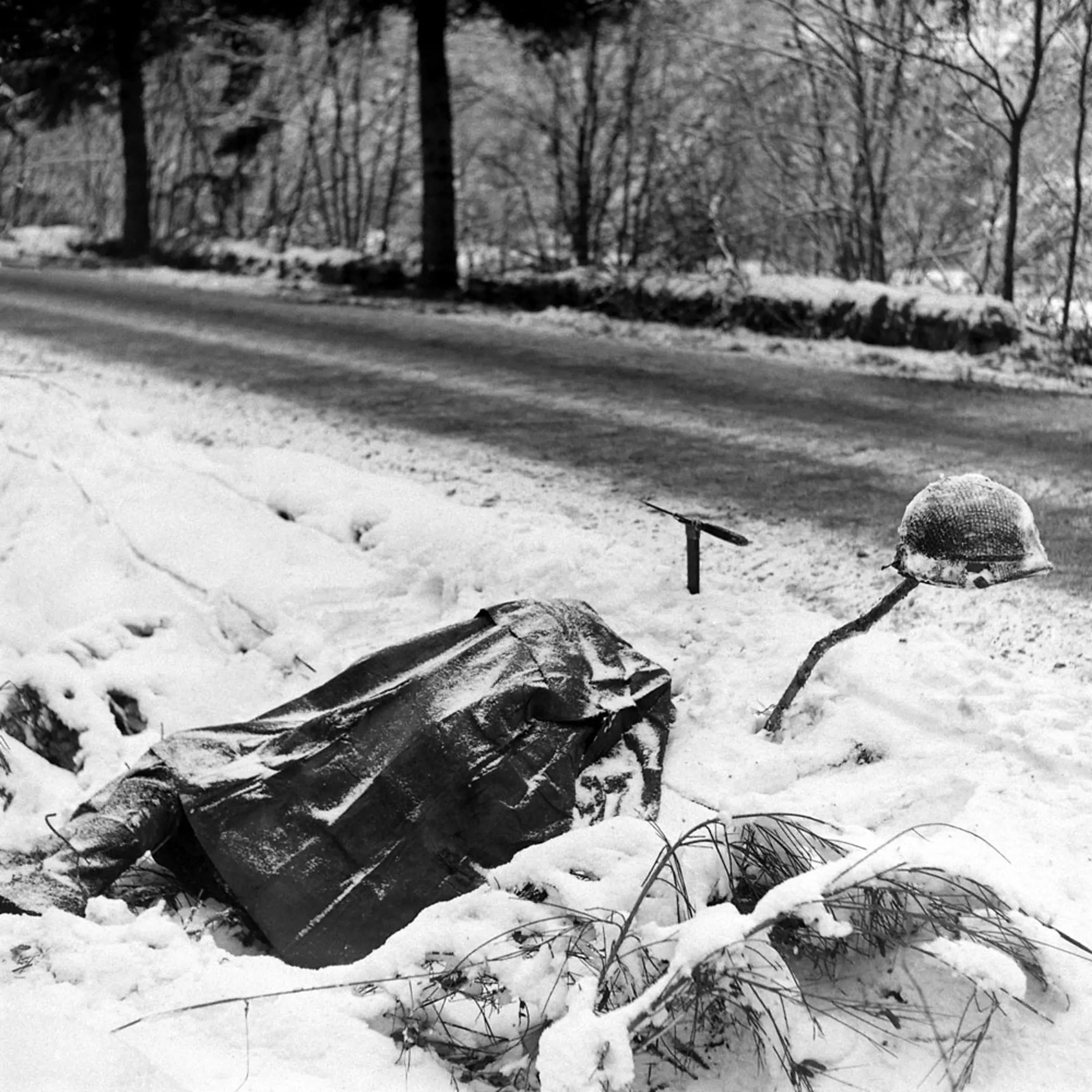
📸 A body beside a road during the Battle of the Bulge. Photo: John Florea/The LIFE Picture Collection/Getty Images
What We Know
Dating depends on the scope a source adopts. Britannica dates the Battle of the Bulge from December 16, 1944 to January 16, 1945. Arlington National Cemetery and the U.S. Army use January 25 as the closing date. These are different conventions for defining the campaign, not evidence that one account recorded the fighting incorrectly. All agree that the Ardennes attack was Germany's last major offensive on the Western Front.
The offensive followed an autumn in which the Allied advance had slowed. Britannica describes the September and October operations as little more than "nibbling" at the German line, apart from the failed thrust toward Arnhem. Germany used the pause to reconstitute units and concentrate an attack force, drawing on relocated reserves, Volkssturm home guard units, and troops withdrawn from France.
Secrecy and surprise were central to the opening. The National WWII Museum notes that German planners assembled the force without alerting the Allies. That surprise helps explain the early advance despite Germany's limited reserves; it should not be treated as proof that shortages were irrelevant.
The casualty figures in the sources cover different sides and different periods. An official U.S. Army history states that the 101st Airborne Division, Combat Command B of the 10th Armored Division, and attached units suffered just over 2,000 casualties in the defense of Bastogne. It records 7,000 German troops killed and more than 200 armored vehicles destroyed in that same action. Arlington's figures cover the broader campaign: about 75,000 American casualties, including roughly 19,000 killed. Arlington describes it as the United States' deadliest single World War II battle. The figures are not contradictory because they measure different forces and scopes.
Tactical Map
Approximate area of operations: the densely wooded Ardennes, initially lightly held, allowed a deep German penetration that created the 'bulge' in Allied lines.
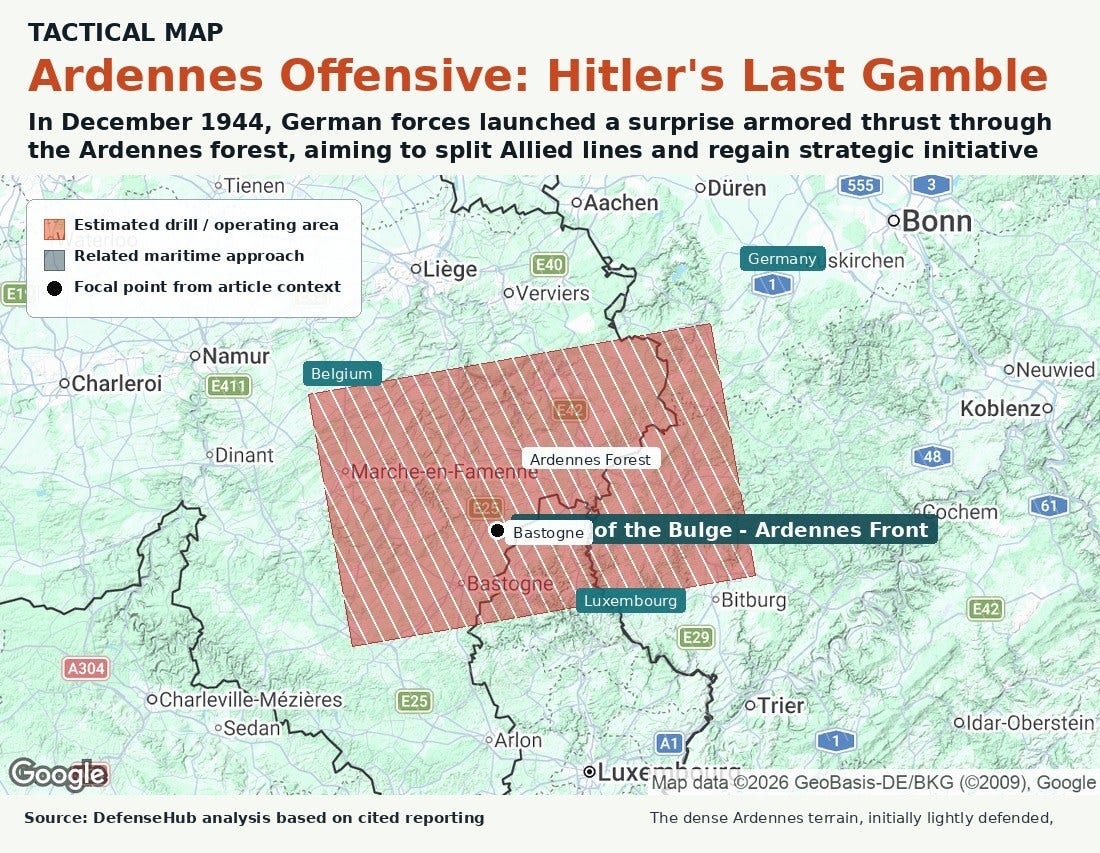
This map is illustrative and is intended only to orient the operational geography discussed below.
Operational Context
By late 1944, Allied armies had crossed northern France and entered Belgium but had lost much of their earlier momentum. Germany used the pause to rebuild units and assemble an offensive force from relocated reserves, the newly raised Volkssturm, and troops withdrawn from France. Hitler then committed those resources to a plan intended to split the British and American armies, capture Antwerp, and force a negotiated settlement with the Western Allies.
In English, the battle's familiar name refers to the salient, or "bulge," that the German advance created in the Allied line. The National Archives explains the 1944 name through the shape of the front on campaign maps. Britannica also connects the phrase to Winston Churchill's use of "Battle of the Bulge" in May 1940. Together, these accounts support both the map-based meaning and a documented earlier use of the phrase; they do not establish a single uncontested origin.
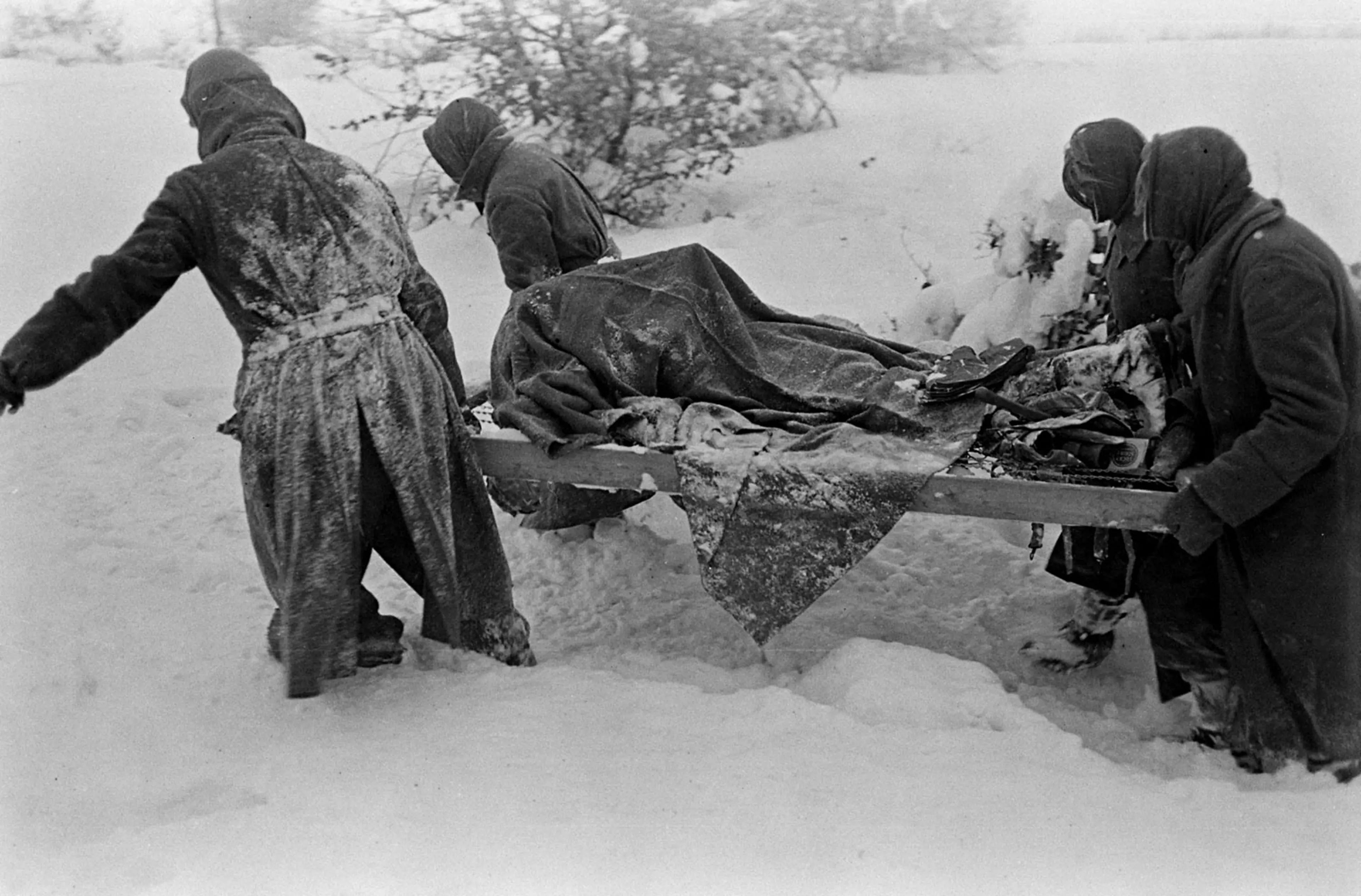
📸 German prisoners of war dig graves during the Battle of the Bulge. Photo: George Silk/The LIFE Picture Collection/Getty Images
The phrase therefore appears in two very different moments. Germany's 1940 breakthrough helped bring about the collapse of Allied forces in France; the 1944 advance failed after its initial shock. Our earlier article on how blitzkrieg's speed and sequence broke enemy lines examines the other side of that contrast in the 1940 campaign.
The initial German advance cannot be explained by resources alone. German forces achieved operational surprise, poor weather initially constrained Allied air power, and lightly held American units slowed the attack long enough for the Allies to regroup. Those factors explain how Germany made early gains without showing that the offensive was sustainable.
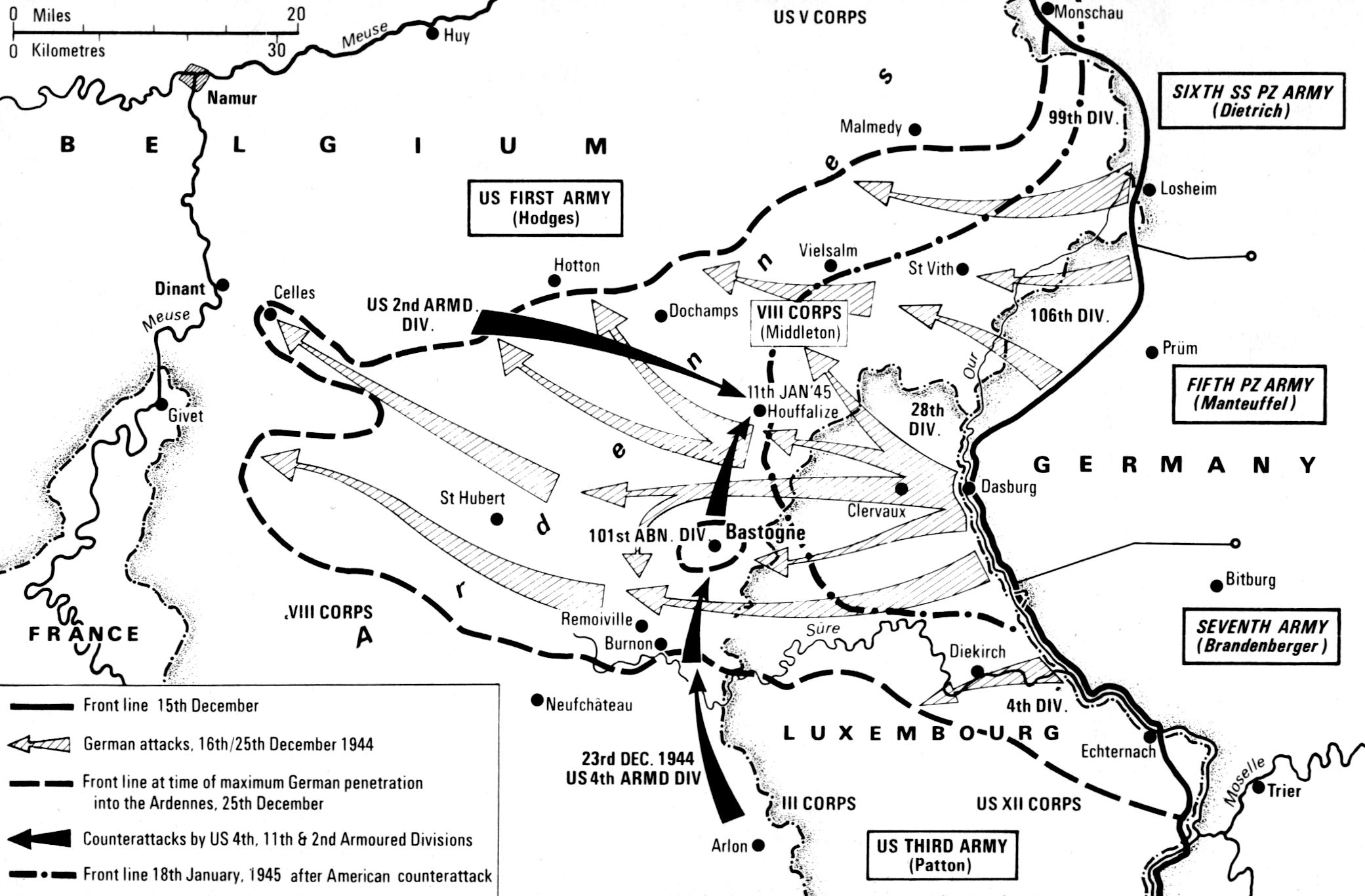
📸 Map of the German advance through the Ardennes and the salient it created in Allied lines. Cartographic source: OnWar
My Read
The central point is not that scarce reserves forced Hitler to attack. Germany had rebuilt enough combat power to mount a surprise offensive, and Hitler chose to spend it on an attempt to divide the Western Allies and reach Antwerp. Britannica notes that an offensive by six Allied armies in mid-November had produced small gains at high cost. That pause created an opportunity for Germany, but it does not by itself explain Hitler's decision.
What stands out is the asymmetry of the risk. Germany committed forces assembled under pressure, including relocated reserves, home guard units, and troops withdrawn from France. The Allies had also endured a costly autumn, but they still had the manpower and equipment to absorb the shock and continue fighting through the winter.
The German choice was not unintelligible. A static defense offered no obvious way to reverse the strategic situation, while an offensive offered at least a chance to disrupt Allied plans. That is an analytical judgment, not proof that the plan was realistic. The opening success owed heavily to secrecy, surprise, terrain, and weather; none of those advantages made the offensive sustainable.
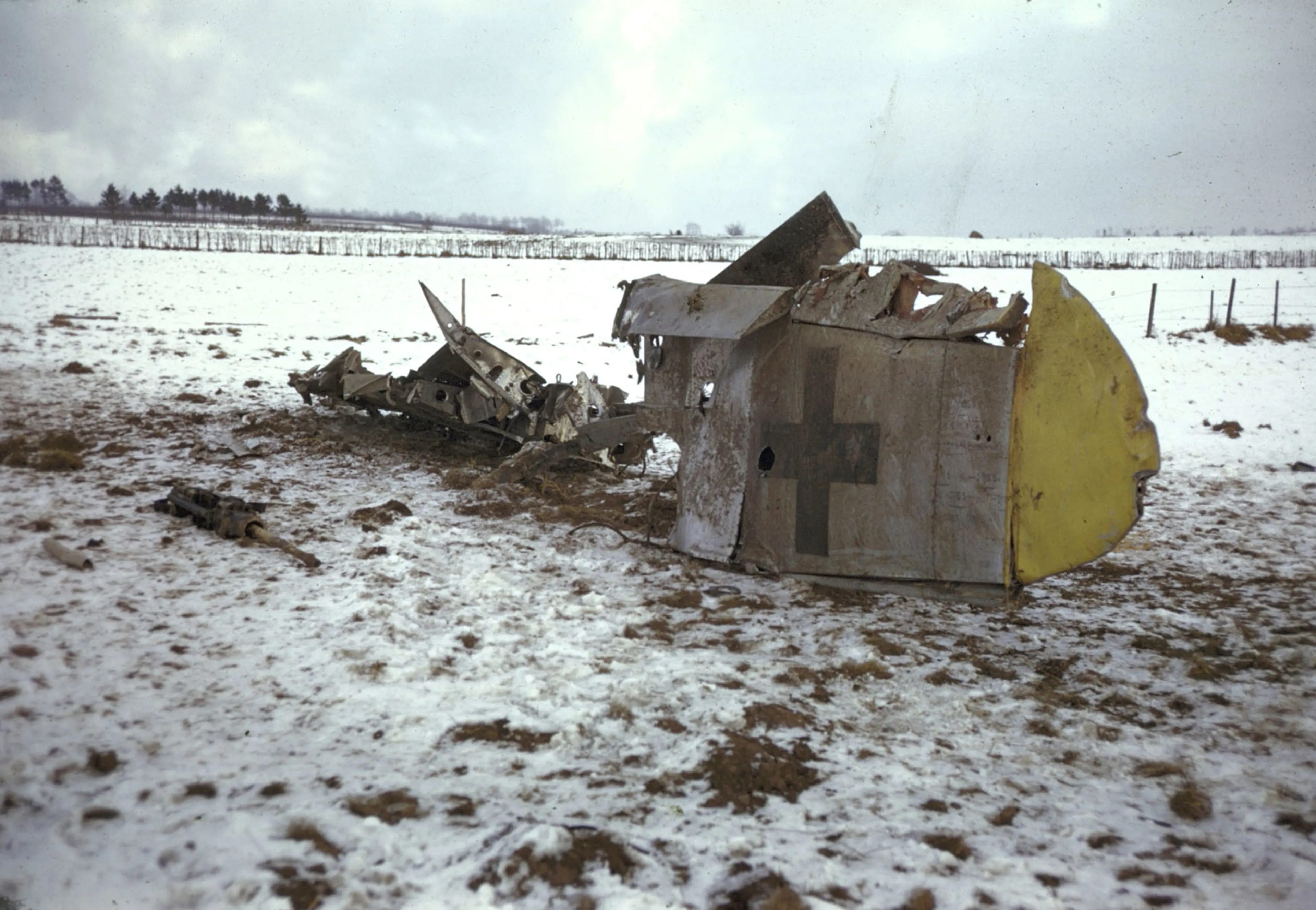
📸 German military wreckage during the Battle of the Bulge. Photo: George Silk/The LIFE Picture Collection/Getty Images
A firmer assessment would require more evidence from German command records about how senior officers judged the plan's objectives and odds. Until then, "last roll of the dice" is a useful interpretation of the offensive, not a settled finding established by the sources cited here.
What to Watch
How each source defines the end of the campaign: Britannica uses January 16, while Arlington and the U.S. Army use January 25.
Whether a casualty figure refers to Bastogne, another phase of the fighting, or the campaign as a whole.
German command records that show how senior officers assessed the offensive's objectives and chances of success.
How studies weigh surprise, weather, terrain, and Allied force dispositions against Germany's shortages of men and equipment.
How historians distinguish the Volkssturm's contribution from that of regular formations and units transferred from other fronts.
Recommended Sources
Battle of the Bulge | Britannica: dates, strategic context, Allied operations in autumn 1944, and the "last major offensive" description.
Battle of the Bulge | Arlington National Cemetery: U.S. casualty totals, the January 25 closing date, and Churchill's "greatest American battle" characterization.
Battle of the Bulge | U.S. Army: the German plan to split the Allied armies and the course of the campaign.
Battle of the Bulge | National Park Service: the German objective of pressuring the Allies toward a negotiated peace.
The Ardennes: Battle of the Bulge | U.S. Army history: a unit-level account of the defense of Bastogne and the losses recorded there.
The Bloodiest Battle | National Archives: archival context and the name's connection to the salient shown on maps.
Battle of the Bulge | National WWII Museum: German secrecy and surprise in assembling the offensive force.
Churchill's French | International Churchill Society: Churchill's documented use of the phrase in May 1940.
Sources & Methodology
This briefing is based on open-source reporting, official releases, procurement documents, defense-industry disclosures, and specialist analysis available at publication time. Claims involving battlefield effects, classified programs, or active operations are treated cautiously unless corroborated by multiple independent sources.
DefenseHub prioritizes primary sources where available, including official releases, budget and procurement records, legislative documents, technical disclosures, institutional research, and reputable reporting.
Corrections or source clarifications can be sent through the DefenseHub contact page.
R. Planche · DefenseHub