

DefenseHub Monthly Assessment · July 2026
This assessment covers the 29 ISW Iran Updates archived in the DefenseHub OSINT repository for July 2026. Across the month, one geographic objective appeared repeatedly: Iranian control over the Strait of Hormuz and the ability to turn the waterway into strategic leverage against the United States and the Gulf states.
The conflict evolved from coercion against commercial shipping and hard bargaining during a ceasefire into direct exchanges between the United States and Iran. By the second half of July, attacks had spread to regional bases, civilian infrastructure, the Red Sea, and the Bab al Mandeb.
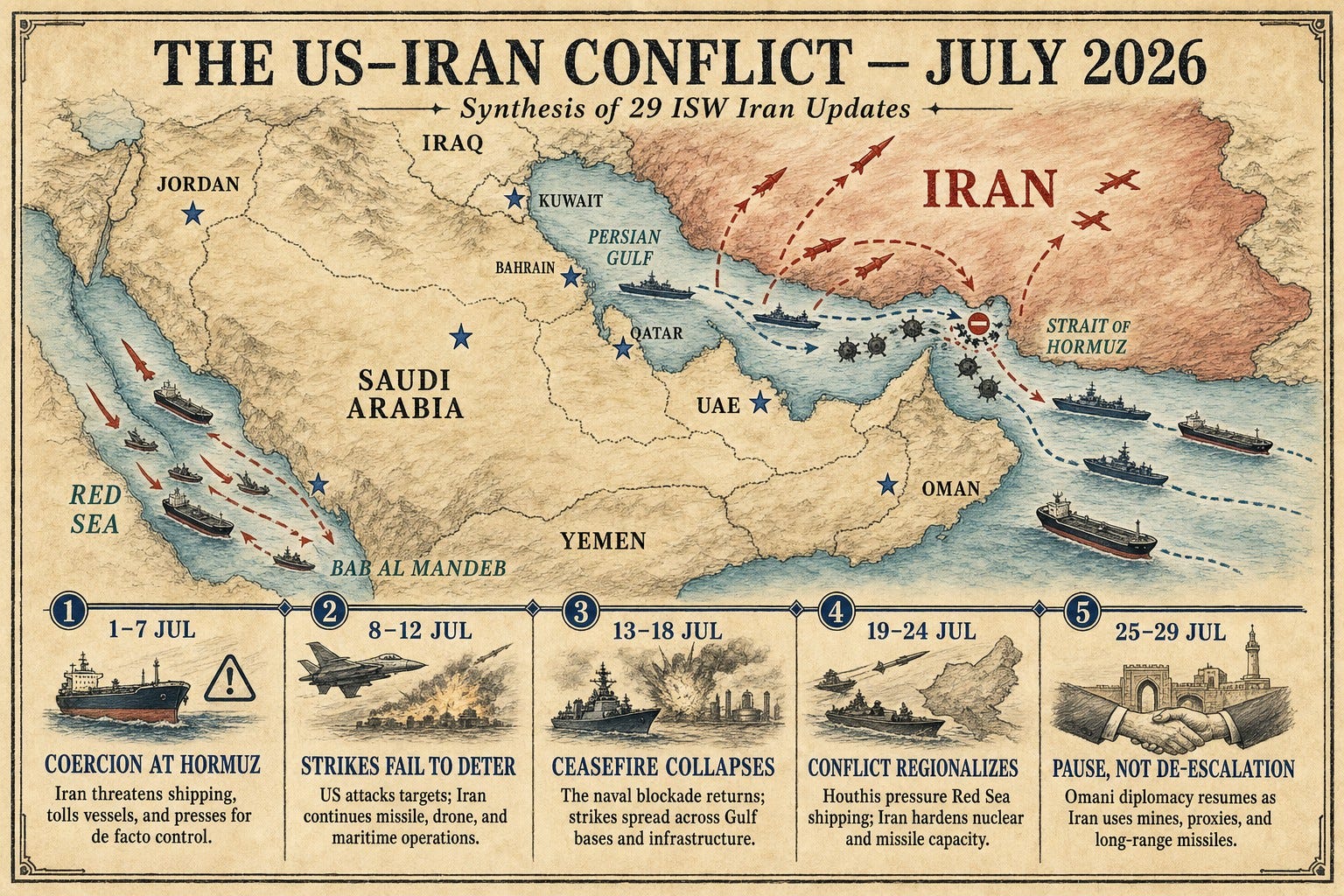
Five phases of the US-Iran conflict identified across 29 ISW Iran Updates.
1–7 July — Coercion at Hormuz
Iran began the month by trying to convert temporary wartime leverage into a permanent political arrangement. Iranian officials pressed for international acknowledgment of Tehran’s authority over shipping through the Strait of Hormuz, proposed tolls, and threatened vessels that refused to follow an Iranian traffic scheme.
Attacks and threats against commercial shipping reinforced the message that Iran was prepared to use force to shape navigation. Preferential treatment for friendly states, including China, suggested that Tehran wanted not simply to close the strait but to control access selectively.
